





GoTab spent three days meeting taproom operators at the Virginia Brewers Conference in Richmond in September 2026. These are the six questions that came up most.
The people who know taproom and brewery operations best are the operators themselves, and a few days of listening to them is a reminder of how much of the hard part has nothing to do with the equipment.
We don't just want to talk about technology. We want to talk about the operational problems that show up when the taproom gets busy, guests start moving around, the kitchen gets backed up and your team is trying to keep everything running smoothly.
Here are the six conversations worth having in any taproom:
- Speed of service — how long between a guest ordering and drinking?
- Roaming tabs — does the tab move when the guest does?
- Production bottlenecks — where does your capacity actually cap out?
- Zone menus — should every area of the venue offer the same thing?
- Membership programs — what behavior is yours designed to create?
- Manual processes — what still depends on someone remembering?
1. Taproom Speed of Service: How Long Between Order and First Sip?
There's a metric every taproom operator understands, even if it doesn't appear on a dashboard: the time between a guest deciding they want another drink and actually getting it.
What happens during those minutes?
Maybe the bartender is taking orders instead of pouring. Maybe servers are walking drinks across a large beer garden. Maybe guests are standing in a line that doesn't need to exist.
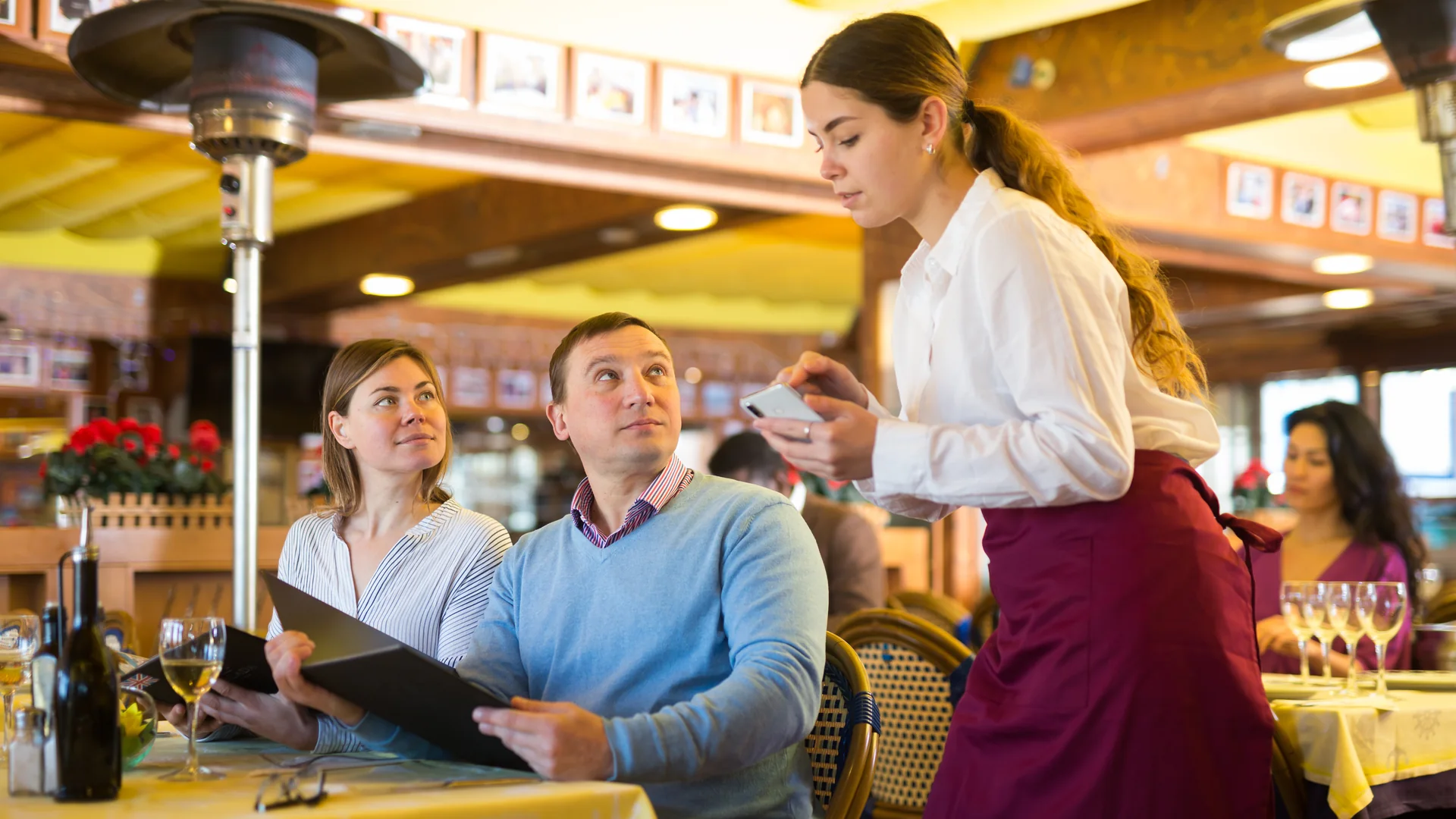
One operator we know tackled the problem by putting dedicated drink runners on the floor during rushes. Bartenders stayed behind the bar and kept pouring. The goal was simple: get the beer into the guest's hand within a minute or two of ordering — while it still had its head.
We've written about how mobile ordering shortens that gap without adding staff. At the conference, we want to hear what you've done.
2. Does the Tab Follow the Guest? Roaming Tabs in Taprooms and Beer Gardens
Taprooms and beer gardens aren't static environments.
Guests move from the bar to a table. They head outside to the patio. They join friends in another section. At entertainment-oriented venues, they may move between activities throughout their visit.
The operational question is: Does their tab move with them?
And just as importantly, does their order?
We've seen the problem firsthand at entertainment venues where food was delivered to a location after the guest had already moved. The order arrived — just to the wrong person.
Technology can help solve that problem. Ordering tied to a guest's phone number, for example, makes it possible to simply text them when an order is ready rather than depending entirely on a table number or physical location. A tab that a guest opens once and carries with them — what we call Easy Tab — removes the location dependency entirely.
It's one reason we think about hospitality technology as something that should follow the guest, rather than forcing the guest to follow the technology.
3. Where's Your Production Bottleneck — and Does Your Kitchen Display System Show It?
Every operation has one.
It could be a pizza oven. A fryer. A particular kitchen station. A limited tap system. Or simply one extremely popular item that everyone seems to order at exactly the same time.
You can add staff, but sometimes the physical capacity simply isn't there.
A wood-fired pizza oven, for example, can only hold so many pizzas. On a busy Friday night, orders can accumulate much faster than the oven can produce them.
Once that happens, the challenge isn't only production. It becomes a communication problem.
How quickly do you recognize the bottleneck? Can you adjust ordering behavior while it's happening? And most importantly, can you set the right expectation with guests before they place an order? A kitchen display system that shows prep times and lets you delay or batch orders is where most operators start.
Those are exactly the kinds of operational problems we want to dig into in Richmond.
4. Should Every Zone Get the Same Menu? Using Order Zones to Manage Capacity
Sometimes the best way to manage capacity is to change what's available based on where a guest is sitting.
A main dining room might offer the full menu, while the patio, beer garden or waiting area gets a smaller selection designed for faster production.
Operationally, that can work beautifully.
For guests, it can be more complicated.
We've seen venues restrict pizza to a main dining room to keep an overloaded pizza oven under control. Guests waiting in a separate bar area received a smaller menu instead. It relieved pressure on the kitchen, but it also created a new challenge: explaining why someone could see a pizza being served 30 feet away but couldn't order one themselves.
That's where thoughtful use of order zones and location-specific menus can help operators balance production capacity with the guest experience.
5. Is Your Brewery Membership Program Actually Creating Loyalty?
Brewery memberships can be incredibly powerful — when there's a reason to keep coming back.
But the value proposition has to remain valuable.
One membership program we encountered was originally built around access to limited-release beers. It worked because members could get something they couldn't easily find elsewhere.
Then those beers started appearing on retail shelves.
Suddenly, the scarcity disappeared — and so did much of the reason to maintain the membership.
The solution was to rethink the program around the taproom itself, with local recognition, benefits and experiences that rewarded members for returning.
That raises a bigger question: What behavior is your loyalty or membership program actually designed to create?
If the answer is simply "give people a discount," there may be a bigger opportunity.
6. What Still Depends on a Server Remembering? Automating the To-Go Beer Ask
Hospitality will always depend on people. That's part of what makes it hospitality.
But there's a difference between a memorable personal interaction and an operational process that only works if a busy server remembers to do something.
Consider to-go beer.
For years, increasing to-go sales might have meant training servers to ask every table whether they wanted beer to take home. Operators ran contests. Managers reminded the team before shifts. And inevitably, sometimes the question simply didn't get asked.
Today, an ordering platform can surface that suggestion automatically at the right moment.
Does that mean technology should replace the server recommendation? Not necessarily. A genuine recommendation from someone who knows the beer will probably beat an automated prompt every time.
But technology can make sure the opportunity doesn't disappear when things get busy. The same logic applies to what you're losing at the tap — we ran the numbers on that in how to cut draft beer loss.
The best operations find the right balance: automate what should happen consistently and give staff more time for the interactions where people make the difference.
Bring Us Your Operational Challenge
These six questions are just a starting point.
If one of them describes your room, we'd like to hear about it. Tell us what slows your operation down when things get busy. Bring us the weird problem. The Friday-night bottleneck. The service workflow your staff has learned to work around. The thing you wish your technology handled without anyone having to think about it.
We spend our days talking about what's working across breweries and taprooms — and what operators are doing differently to serve more guests without sacrificing the experience. If you'd like to talk through any of the six in your own taproom, get in touch.