




While Keeping the Hospitality Front and Center
Modern taprooms are busier—and more complex—than ever. What used to be a single bar with a steady flow of regulars has evolved into a dynamic environment with patios, food trucks, merchandise, events, memberships, and guests who expect flexibility at every step.
Today’s brewery guests bounce between the bar, the patio, communal tables, live music, and pop-up food concepts. They expect to open a tab instantly, reorder without waiting in line, and close out on their own terms. At the same time, operators are navigating tighter margins, rising labor costs, and the constant challenge of keeping staff focused on hospitality instead of administrative tasks.
That’s where a purpose-built hybrid service model and robust memberships program can help. By blending counter service, QR code ordering, mobile tabs, and smart order routing, breweries can reduce friction, grow tabs, and preserve margins—without sacrificing the human experience that makes taprooms special.
Here are five proven ways to make your taproom run like a well-oiled machine.
1. Design Your Hybrid Service Model on Purpose
Hybrid service works best when it’s intentional. Rather than forcing all guests into a single ordering flow, the most successful taprooms give guests multiple ways to order based on where they are and how they want to interact.
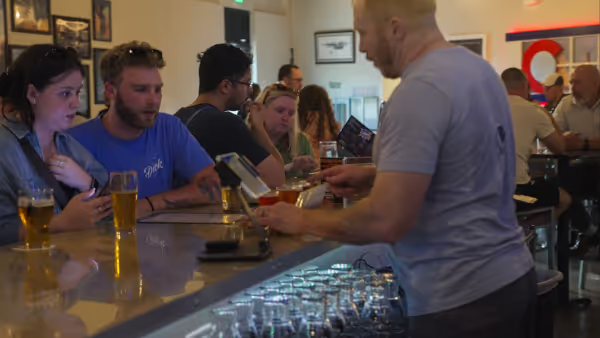
That might mean traditional counter service at the main bar, roaming staff with handhelds during peak times, and QR codes at tables, high-tops, and patios. The goal isn’t to replace staff—it’s to distribute demand so no single ordering channel becomes a bottleneck.
Breweries that design their service model deliberately see faster throughput, fewer abandoned lines, and more consistent revenue during busy periods.
2. Use QR Codes to Kill the Line—Not the Vibe
QR ordering and payment often gets a bad rap when it’s treated as a replacement for hospitality. But when used correctly, QR codes do the opposite: they free staff to focus on tastings, storytelling, and guest engagement.
Strategic placement is key. QR codes work best at tables, railings, and outdoor zones where guests are already settled. From their phones, guests can open a tab, browse the current draft list, and reorder without leaving their seat—while bartenders stay behind the bar doing what they do best.
At Farmcraft Brewery, creative service zones are a major focus. By pairing QR ordering with clearly defined indoor and outdoor areas, the team is able to extend full service across patios, communal spaces, and event areas without adding unnecessary labor. The result is smoother traffic flow, higher per-guest spend, and a taproom that feels effortless even at peak volume.
3. Let Mobile Tabs Follow Guests Everywhere
One of the biggest frustrations for guests is having to close out and reopen tabs as they move through a space. Hybrid service eliminates that friction by letting tabs travel with the guest.
With mobile tabs, a guest can start an order with a bartender, continue ordering from their phone, split checks with friends, and close out whenever they’re ready—without returning to the bar. Tabs can follow guests from the main bar to the patio to merchandise sales, creating a seamless experience across the entire venue.
This flexibility doesn’t just improve guest satisfaction; it also increases total spend by removing barriers to reordering.
4. Treat Your Patio Like a First-Class Service Zone
For many breweries, the patio is the most valuable—and most underserved—part of the taproom. Too often, outdoor spaces are treated as an operational afterthought, leading to long waits, missed orders, and frustrated guests.
High-performing breweries extend the same ordering options outdoors that they offer inside: QR codes at every table, clear zone strategies for routing, and mobile tabs that stay open as guests move between fire pits, lawn games, and communal seating.
This approach allows patios to operate at full capacity without requiring dedicated outdoor staff at all times, especially during shoulder seasons and events.
5. Route and Batch Orders to Keep the Back of House Flowing
Front-of-house efficiency only works if the back of the house can keep up. Smart routing and batching ensure that drinks go to the fastest bar station and food orders land in the right prep area—automatically.
Instead of staff chasing tickets or manually coordinating orders, flexible routing allows teams to handle higher volume with less stress. Real-time text updates keep guests informed, reducing interruptions and freeing staff to stay present on the floor.
At Bear Cave Brewing, operational efficiency was directly tied to protecting margins. By pairing hybrid service with built-in insufficient funds protection, Bear Cave was able to preserve profits while still offering guests the flexibility of mobile tabs—reducing walkouts and unpaid balances without creating awkward moments for staff.
Build Systems to Support Hospitality, Not Replace It
The best run taprooms flow—they feel effortless. Hybrid service works when it’s designed around real guest behavior, real staff workflows, and real operational constraints.
By intentionally combining counter service, QR ordering, mobile tabs, patio-first thinking, and smart order routing, breweries can move faster, serve more guests, and protect margins—making it easier to layer in memberships that reward loyalty and keep regulars coming back.
Running your taproom like a machine doesn’t mean stripping out hospitality. It means building systems that let your people—and your beer—shine.