




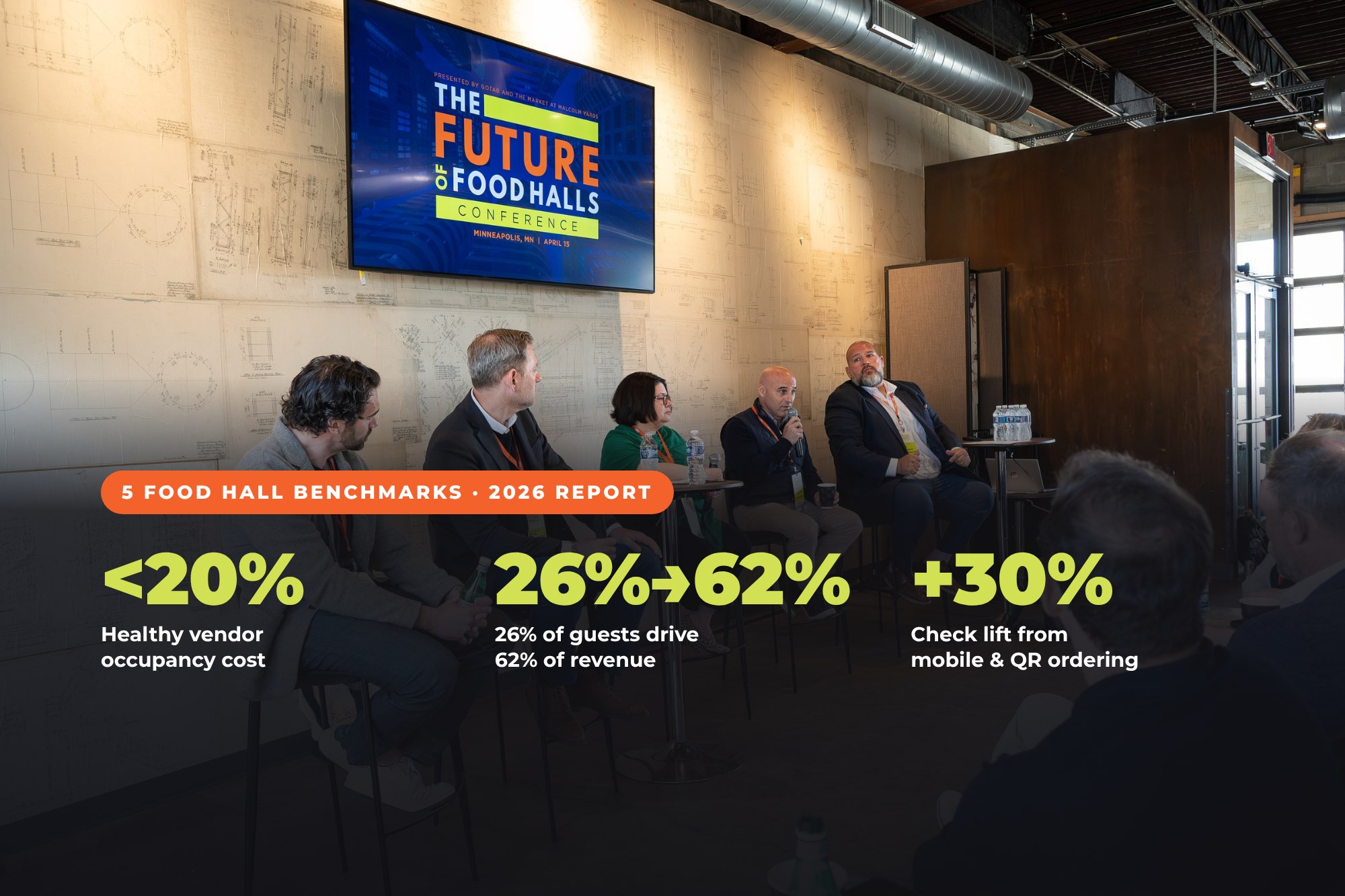
Michael Morris didn’t ease into it. Speaking on a panel at the 2026 Future of Food Halls Conference, held at The Market at Malcolm Yards in Minneapolis in April, the Cana Development leader told a full room of food hall operators exactly where he sees them go wrong.
The two biggest mistakes, Morris said, are “letting vendors choose their own POS” and “giving up control of the bar.”
That kind of straight talk set the tone for the inaugural Future of Food Halls Conference, and it produced some of the sharpest food hall benchmarks the industry has seen. The event reached full capacity in its first year, and nearly 30 operators, developers, designers and technology leaders took the stage to share what’s working, what isn’t — and what the numbers actually say.
Those numbers live in The Future of Food Halls: 2026 Report. GoTab, an entertainment commerce platform built for high-volume venues like food halls, entertainment venues and hotels, sponsors the conference and published the report in September.
“We didn’t want what happened in Minneapolis to stay in that room,” said Patricia Mejia, chief marketing officer at GoTab. “Operators were sharing numbers you rarely hear out loud, from occupancy costs to event margins. Anyone opening or running a food hall right now can use this report to see how their own business measures up.”
The stakes keep rising. As of early 2026, Colicchio Consulting’s State of Food Halls 2026 report tracks 458 operating food halls across the U.S., with at least 114 more in the pipeline. Of the 20 food halls that opened in 2025, 14 landed in suburban or peripheral markets rather than downtown cores. Hospitality groups, mixed-use and retail developers, public-private partnerships and universities are leading the investment, the report found.
More halls mean more competition for guests, vendors and capital. GoTab’s Future of Food Halls report puts it bluntly. Whether food halls work is no longer up for debate. What matters now is what separates the halls that scale from the ones that stall.
The Numbers That Matter Most
Across seven panels in Minneapolis, operators kept coming back to the same handful of numbers. They’re insights drawn from the conference discussions and the real-world experience of the people running food halls, which makes them a useful gut check for any operator:
Vendor occupancy cost: under 20% of sales. Morris, of Cana Development, considers that the healthy range. From 20% to 23% is a caution zone, and past 23% to 24% calls for intervention before turnover starts.
Dwell time: approximately 26% of guests, nearly 62% of revenue. In many cases, a small group of guests who stay longer drives most of the sales, according to Josh Goodman, founder and CEO of PourMyBev.
Mobile and QR ordering: a lift of 30% or more. Operators and technology providers said check averages can climb that much when guests can reorder from their table instead of heading back to the counter.
Private events: margins that can exceed 50%. In many cases, private bookings bring in predictable revenue and rank among the most profitable business in the building, which makes flexible event space worth planning for from day one.
Buildout: under $300 to more than $3,000 per square foot. Despite that huge range, operators reported little connection between construction spending and check averages or sales growth. More operators are now focusing on layouts that support guest flow and flexibility.
Morris treats vendor health as an early-warning system. When occupancy costs eat too much of a vendor’s sales, the fallout follows a predictable path: turnover, fewer choices for guests and a hall that slowly loses its pull.
His warning about technology and the bar ties back to the same idea. When every stall runs its own system, operators can’t clearly see sales, guest behavior or vendor performance. When an outside party runs the bar, they hand off one of the biggest drivers of margin and dwell time in the building.
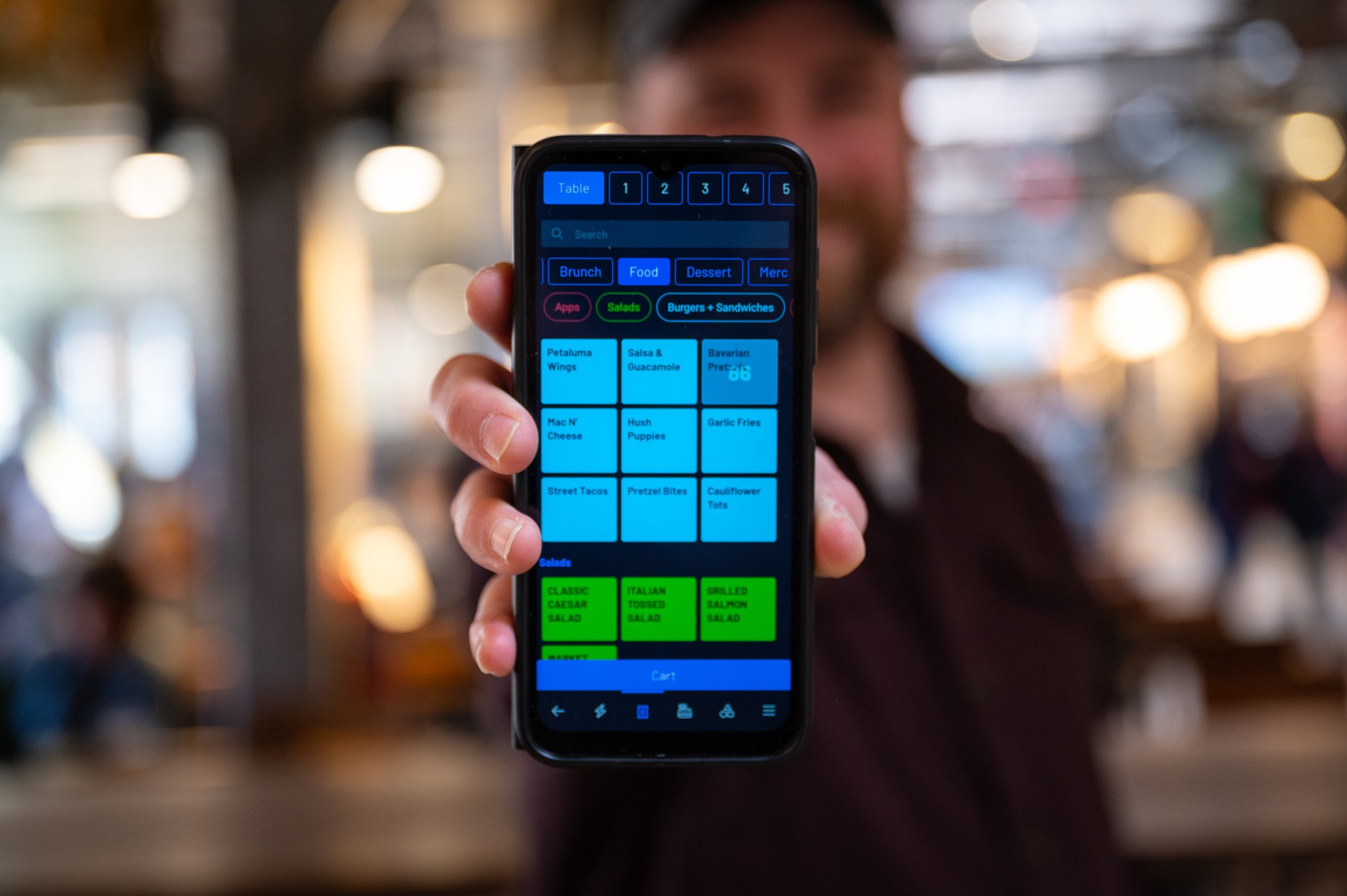
Many of the category’s leaders now put every vendor on one multi-vendor POS for food halls. GoTab’s Food Hall POS was built for that model, giving guests one ordering experience across every vendor while vendors keep control of their own business.
Ryan Gromfin, founder of The Restaurant Boss, summed up the operations side in six words. “You don’t manage people,” he said. “You manage systems.”
Time Is the New Check Average
The dwell time benchmark may be the most important number in the report. Goodman, whose company builds self-pour beverage systems for food halls and other venues, shared that in many cases, approximately 26% of guests drive nearly 62% of total revenue. Put simply, the longer guests stay, the more they spend.
“The dwell time conversation is very relevant,” Goodman said. “When guests can go back and forth without committing to sitting in line, it changes how they use the space.”
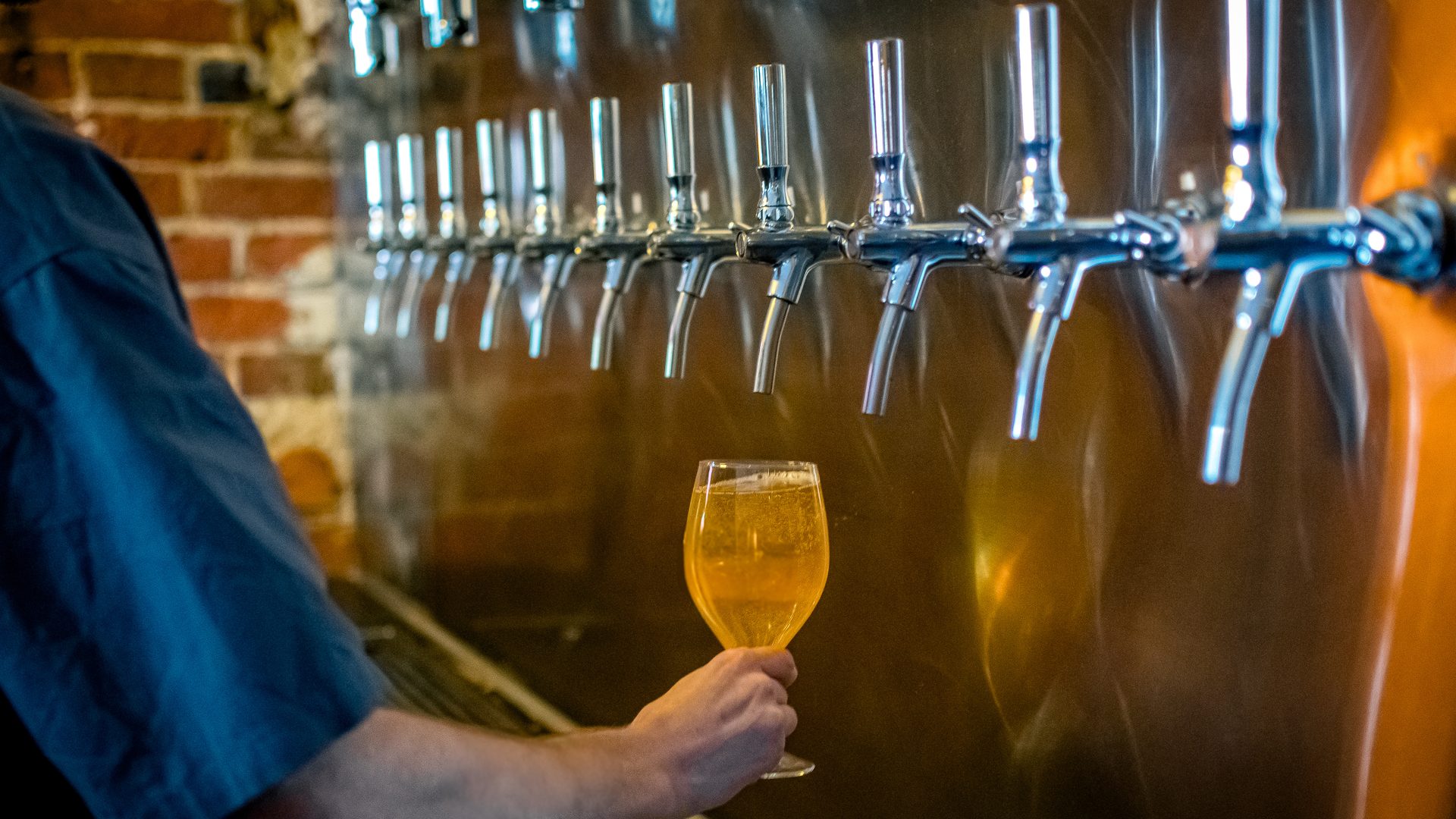
That puts beverage programs in the spotlight. Drinks are often the most profitable part of a food hall, and operators are finding new ways to keep them flowing, from self-pour walls and cocktails on tap to mobile ordering that skips the line entirely. JP Albanese, general manager of The Market at Malcolm Yards, has become a fan of keg cocktails. He said they are fast, efficient and consistent, with the same drink coming out no matter who’s behind the bar.
Colicchio’s research points the same way. Many of the newest food halls pair high-volume bars with quick-service concepts or expanded event programming, specifically to keep guests around longer.
Events are the other big lever. Public events build buzz and bring guests back, while private bookings bring in predictable revenue at some of the highest margins in the hall. The smartest operators no longer treat programming as marketing. They treat it as revenue infrastructure.
Chris Viola, founder of Culture Collective Hospitality, said the best halls learn to hold two ideas at once.
“The most successful food halls are finding the balance between operational consistency and constant evolution,” Viola said. “Strong systems create the foundation, but programming, community and experience are what keep people coming back. We’re still early as an industry, and that’s what makes this category so exciting.”
The Future of Food Halls Conference Heads to Boulder in March 2027
Minneapolis gave the industry its benchmarks. Boulder will put them to the test.
The second Future of Food Halls Conference is set for March 15–16, 2027, at Rembrandt Yard, a downtown Boulder art gallery and event space just off Pearl Street with floor-to-ceiling views of the Flatirons. The event brings together the people who build, run and invest in food halls to dig into what makes them succeed.
Food hall conference 2027 at a glance:
Tickets and early-bird pricing: Tickets are on sale now, and early-bird pricing ends Nov. 30. The first conference reached full capacity, so registering now locks in the lower rate and a seat before the room fills up again.
The program: Sessions on vendor health and rent structures, placemaking and design, and the systems, staffing models and workflows behind multi-vendor operations
Closing keynote: Colicchio Consulting on where the industry is headed
Opening night: Dinner and drinks at The Golden Mill in Golden, with round-trip coach transportation from Rembrandt Yard
Day Two lunch: Rosetta Hall, a working Boulder food hall
Hotels: Discounted room blocks at two Boulder hotels
Anyone who missed Minneapolis can catch up with The Future of Food Halls: 2026 Report before arriving.
Tim McLaughlin, co-founder and CEO of GoTab, said Minneapolis proved the industry wanted more.
“The best ideas in this industry don’t come from one company or one operator,” McLaughlin said. “They come from getting the brightest people in the same room and letting them encourage each other. That’s what happened in Minneapolis, and it’s why we’re going even bigger in Boulder. Food halls are still writing their playbook, and we want to help the whole industry write it together.”
Frequently Asked Questions
What is a healthy vendor occupancy cost for a food hall?
Under 20% of a vendor’s sales, according to Michael Morris of Cana Development, who spoke at the 2026 Future of Food Halls Conference. Costs between 20% and 23% are a caution zone, and anything past 23% to 24% calls for intervention before vendor turnover starts.
How does dwell time affect food hall revenue?
Guests who stay longer spend more. Operators at the 2026 conference reported that in many cases approximately 26% of guests drive nearly 62% of total revenue, which is why beverage programs, events and line-free reordering matter so much.
Does mobile and QR ordering increase food hall check averages?
Operators and technology providers said check averages can rise 30% or more when guests can reorder from their table across every vendor instead of returning to a counter.
How profitable are private events for food halls?
Private bookings can deliver margins above 50% and bring in predictable revenue, making them among the most profitable business in the building. Operators recommend planning flexible event space from day one.
How much does it cost to build out a food hall?
Operators reported buildout costs ranging from under $300 to more than $3,000 per square foot, with little connection between construction spending and check averages or sales growth. Layouts that support guest flow and flexibility mattered more.
When and where is the Future of Food Halls Conference 2027?
March 15–16, 2027, at Rembrandt Yard in Boulder, Colorado, with an opening night at The Golden Mill in Golden and a Day Two lunch at Rosetta Hall. Early-bird tickets are $395 through Nov. 30. Register at futurefoodhalls.com.