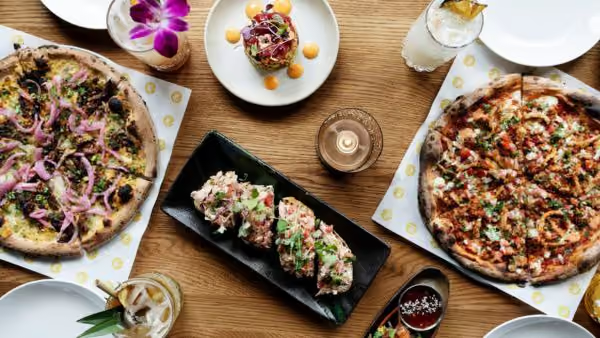





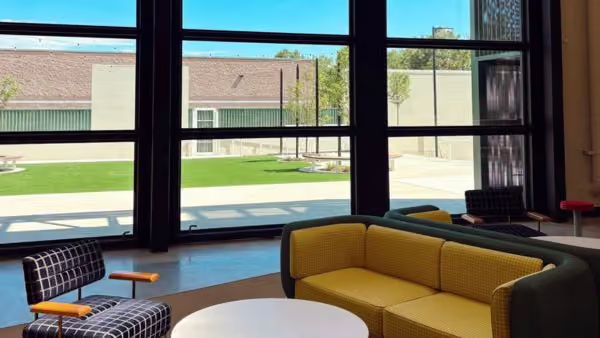
PANORAMA GENERAL: Los mercados gastronómicos están en auge, pero Relish Food Hall // Pickleball no sigue el guion establecido. El establecimiento de Louisville, Colorado, combina pickleball competitivo y una oferta gastronómica de múltiples proveedores bajo un mismo techo, creando un modelo de hospitalidad diseñado para que los visitantes se muevan sin problemas entre el ocio y la gastronomía.
Construido dentro de un antiguo Sam's Club que estuvo mayormente vacío durante 15 años, Relish ahora funciona como un destino de 78,000 pies cuadrados con 19 canchas de pickleball cubiertas, dos canchas de pickleball al aire libre, una cancha de bochas al aire libre, ocho puestos de comida, salas de conferencias y espacio para eventos para hasta 800 invitados.
Eso convierte a Relish en más que una historia creativa de reutilización adaptativa. Es un estudio de caso real sobre la generación de tráfico, la conversión de clientes y la estratificación de ingresos. El pickleball atrae a la gente. El mercado gastronómico les da una razón para quedarse. Los eventos, las membresías y la programación comunitaria añaden ingresos adicionales.
El proceso no fue rápido. Los propietarios Jeff y Amy Youngstrom compraron aproximadamente el 60% del antiguo Sam's Club a una iglesia local, luego pasaron años gestionando la rezonificación antes de que pudiera comenzar la construcción.
“Tomó casi cinco años sortear las regulaciones, la zonificación y los obstáculos de construcción antes de que el edificio realmente comenzara a tomar forma”, dijo Tanner Cady, Director de Relish Food Hall.
Los propietarios inicialmente consideraron una instalación de baloncesto, pero un amigo que era un ávido jugador de pickleball los instó a considerar el auge del deporte. La idea prosperó.
“Tenían el sueño de crear un área de reunión comunitaria en la ciudad”, explicó Cady.
Cuando Relish abrió en junio de 2025, la complejidad tecnológica se hizo evidente. El establecimiento no funcionaba como un restaurante tradicional, un mercado gastronómico o una instalación deportiva. Estaba operando los tres simultáneamente. GoTab fue diseñado precisamente para esto.
CÓMO GOTAB IMPULSA RELISH FOOD HALL // PICKLEBALL
- Funcionalidad de cuenta abierta en todo el mercado gastronómico, bar y negocio de eventos.
- Cuentas unificadas de alimentos y bebidas para eventos privados y grupos corporativos.
- Flujos de trabajo de pedidos de múltiples proveedores que permiten a los proveedores localizar y añadir a las cuentas de los clientes, además de una infraestructura de servicio compartida entre puestos independientes y conceptos operados por la casa.
- Pedidos para eventos que permiten a los invitados salir de las reuniones o alquileres de canchas y pedir desde múltiples ubicaciones.
- Uso futuro de tarjetas RFID para cuentas de grupo, acceso a eventos y controles de gasto de los clientes.
- Trabajo de integración con 7Shifts para la gestión de personal y el fondo de propinas.
- Puntos de conexión planificados con Court Reserve para reservas de canchas y actividad de membresías.
- Soporte ágil y ciclos de retroalimentación del producto para un establecimiento que aún está perfeccionando su modelo operativo.
Cady comentó que cuando Relish recientemente tuvo un problema técnico antes de abrir, el soporte de GoTab respondió casi de inmediato.
"Envié un mensaje a Soporte. Llamé a Soporte. Me respondieron por mensaje de texto 30 segundos después", explicó. "En menos de tres minutos, me dijeron cómo solucionarlo. Y en siete minutos, todo el sistema estaba funcionando de nuevo."
Para un operador que gestiona múltiples puestos, servicios compartidos y tráfico de eventos, ese tipo de tiempo de respuesta no es solo soporte. Es protección operativa.
CÓMO FUNCIONA EL MODELO RELISH
Relish se basa en una idea operativa simple pero poderosa: crear múltiples razones para que los clientes entren al edificio y luego ofrecerles formas sencillas de gastar una vez que estén dentro.
Esa combinación de hospitalidad le da al establecimiento una ventaja que muchos mercados gastronómicos aún están tratando de construir. En lugar de depender solo del tráfico de clientes para el almuerzo, la cena o los fines de semana, Relish atrae a usuarios recurrentes a través de membresías, ligas, torneos, clases, campamentos, juego libre y alquiler de canchas.
"El pickleball nos ayudó mucho al principio porque había mucho interés en la comunidad", compartió Cady. "Había tanta gente que quería jugar que se llenó bastante rápido."
El desafío ahora es convertir ese tráfico en reconocimiento del mercado gastronómico y consumo.
"Lo que estamos viendo es que estamos superando esa confusión inicial de, ¿qué es ese lugar?", dijo Cady. "¿Es solo una instalación de pickleball o también es un mercado gastronómico?"
Relish está respondiendo a esa pregunta de manera operativa. El equipo está creando beneficios de membresía que incluyen créditos mensuales para alimentos, para dar a los miembros del club de pickleball una razón inherente para pasar al mercado gastronómico.
"Les vamos a dar un vale para el mercado gastronómico que podrán usar cada mes con su membresía de pickleball", dijo Cady. "Así los atraeremos al lado del mercado gastronómico."
Para los operadores, ahí es donde el modelo se vuelve especialmente interesante. Relish está utilizando la recreación para impulsar la frecuencia, y luego usando alimentos y bebidas para aumentar el potencial de consumo y el tiempo de permanencia.
LA OPERACIÓN DEL MERCADO GASTRONÓMICO
El lado del mercado gastronómico incluye un total de ocho puestos – siete puestos de vendedores locales independientes, mientras que Relish opera el octavo concepto por sí mismo. Cuenta con un bar interno, una cafetería y un puesto de helados y licuados.
Cady supervisa alimentos y bebidas, relaciones con proveedores, operaciones diarias, servicios compartidos, personal de apoyo, inspecciones y reparaciones. El mercado gastronómico debe funcionar tanto como un modelo de arrendador como una experiencia de hospitalidad dirigida por el operador.
Esa mezcla de proveedores es intencionalmente local. Algunos proveedores venían de food trucks. Otros tenían experiencia previa en restaurantes o catering. Un proveedor lanzó su primer negocio de comida dentro de Relish con sus padres.
“Son todas personas locales que buscaban una oportunidad para unirse al grupo y probar algo nuevo”, dijo Cady. “Han sido buenos socios para nosotros”.
La experiencia del cliente depende de que esos negocios separados se sientan fáciles de navegar. Ahí es donde GoTab ayuda a reducir la fricción. Los clientes no tienen que pensar en la complejidad detrás de los puestos. Para eventos y pedidos grupales, pueden acercarse a los locales participantes, pedir lo que quieran y que se les agregue a la cuenta correcta.
“Pueden tener una cuenta de bar y una cuenta de comida, o simplemente una cuenta unificada para todo el negocio”, dijo Cady. “Es muy fácil para los vendedores encontrar esa cuenta y agregar el pedido de una persona”.
Esto es crucial en momentos de alto volumen.
Después de un evento reciente, aproximadamente 200 personas entraron al patio de comidas al mismo tiempo. En lugar de que una sola fila se saturara, los clientes se distribuyeron entre los vendedores.
“Todos entraron y en 20 minutos, todos estaban comiendo algo”, dijo Cady. “Como que eligen al que no tiene mucha fila. Esto distribuye muy bien el negocio”.
Ese es el valor para el operador de un patio de comidas cuando el modelo de servicio funciona. El volumen se distribuye y los clientes siguen circulando. Los vendedores captan la demanda. La experiencia se siente más fácil de lo que realmente es el sistema interno.
“Lo que más le gusta a la gente es simplemente poder acercarse, elegir algo que les apetezca y pedir”, dijo Cady.
CÓMO EL PICKLEBALL IMPULSA EL NEGOCIO
Relish se propuso intencionalmente que el área de pickleball se sintiera como una instalación deportiva de alto nivel, no como un bar con canchas añadidas como algo secundario.
El equipo dedicó aproximadamente 50,000 pies cuadrados al pickleball e invirtió en aislamiento acústico, iluminación y diseño para que el área deportiva y el patio de comidas pudieran operar como entornos conectados pero distintos.
“La idea era que se sintiera como una instalación de ejercicio de lujo y no solo como si fueras a un bar y de casualidad estuvieras jugando pickleball”, dijo Cady.
El área de pickleball tiene su propio ritmo operativo, con miembros mensuales, miembros fundadores, juego libre, reservaciones de cancha, ligas, torneos, clases, campamentos para niños y un director de pickleball dedicado. “Aunque somos una sola unidad, tenemos una instalación completa de pickleball y luego un patio de comidas”, dijo Cady.
El modelo también funciona para eventos. Un grupo corporativo puede rentar canchas por varias horas y luego pasar de forma natural a la comida y bebida sin salir de la propiedad.
“Tienen todas las canchas de pickleball rentadas”, dijo Cady sobre un evento. “Están ahí por cinco horas, y en esas cinco horas, pueden simplemente salir y pedir comida donde quieran y simplemente detenerse a tomar un descanso”.
Esa es la oportunidad más grande. Relish no solo vende tiempo de cancha o comidas. Está vendiendo una experiencia completa.
UNA PARTE COMPROMETIDA CON LA COMUNIDAD
Relish aún está en las primeras etapas de su vida operativa, pero la siguiente fase ya está tomando forma: una ejecución de eventos más sólida, una conversión más eficiente del patio de comidas y beneficios de membresía más conectados.
A medida que el lugar se acerca a su primer aniversario, el equipo tiene esperanzas sobre lo que está por venir. Relish ya ha comenzado a convertirse en un centro comunitario, no solo a través del pickleball y la comida, sino también a través de las relaciones que está construyendo en Louisville y sus alrededores.
Cady mencionó que Relish ha organizado reuniones relacionadas con el Incendio Marshall, reuniendo a personas afectadas por el desastre junto con socorristas, fuerzas del orden y bomberos. Vinieron por café, desayuno y un lugar para reconectarse. Para un lugar construido en torno a la hospitalidad, esos momentos demuestran lo que el modelo puede llegar a ser cuando se utiliza bien.
La conexión con la comunidad también se extiende a la próxima generación.
"Tenemos un programa de embajadores estudiantiles realmente genial", dijo Cady. "Adolescentes de escuelas locales aprenden a usar las redes sociales y conexiones sociales reales para promover e impulsar negocios en un entorno profesional. Experimentan nuestros beneficios para empleados y forman parte del equipo. Es una excelente manera de conectar con la juventud local."
Relish también prioriza la contratación de adolescentes locales, brindando a los jóvenes una exposición temprana al mundo laboral mientras les ayuda a desarrollar habilidades profesionales.
"Sentimos una verdadera responsabilidad de ayudar a los adolescentes locales a aprender esas importantes lecciones de vida", explicó Cady. "Tienen una gran presencia en la comunidad y queremos darles un lugar para adquirir experiencia laboral y desarrollar confianza."
El lugar también ha estado trabajando estrechamente con dos cámaras de comercio locales, proporcionando espacio para eventos comunitarios y de negocios mientras fortalece las relaciones con líderes locales, emprendedores y comunidades en desarrollo que buscan promover sus servicios y comercio.
"Hemos estado haciendo mucho con la comunidad", dijo Cady. "Ese ha sido nuestro enfoque ahora que el pickleball está en auge: ¿cómo hacemos que el 'food hall' sea parte de la comunidad?"
El siguiente paso es seguir conectando esas experiencias operativamente, utilizando créditos de comida para atraer a los miembros al 'food hall', mejorando los flujos de trabajo de las cuentas grupales, expandiendo el uso de tarjetas RFID y perfeccionando cómo los invitados se mueven por el lugar.
Para Cady, el panorama general es simple. Relish se está convirtiendo en el tipo de lugar que la gente usa de diferentes maneras en diferentes momentos, ya sea que estén jugando un partido, asistiendo a un evento corporativo, reuniéndose con amigos para almorzar, uniéndose a un grupo de yoga matutino, participando en un torneo de Mahjong o pasando tiempo en familia.
"Desde que abrimos, ha sido una fuerza impulsora del negocio el estar enfocado en la comunidad y crear un lugar donde la gente se sienta segura al reunirse", dijo Cady. "Se ha convertido en un lugar de reunión realmente agradable."
PUNTOS CLAVE
Lugar: Relish Food Hall // Pickleball, Louisville, Colorado
Concepto: Instalación híbrida de pickleball, 'food hall', bar, cafetería, heladería, cancha de bochas y lugar para eventos
Inauguración: Junio de 2025
Superficie: 78,000 pies cuadrados dentro de un antiguo Sam’s Club
Componente deportivo: 19 canchas de pickleball cubiertas, dos canchas al aire libre, una cancha de bochas al aire libre, membresías, ligas, torneos, clases, campamentos para niños y juego libre.
Componente de Food Hall: Siete vendedores locales independientes operando en ocho puestos, con Relish a cargo del octavo concepto internamente, incluyendo un bar, una cafetería y una heladería y juguería.
Stack tecnológico: POS GoTab, cuentas abiertas, pedidos a múltiples proveedores, cuentas para eventos, Tripleseat para reservas de eventos, uso planificado de tarjetas RFID, trabajo de integración con 7Shifts, Court Reserve para reservas de canchas y gestión de membresías.
Valor de GoTab: GoTab ayuda a Relish a conectar múltiples centros de ingresos, incluyendo canchas, vendedores, bar, eventos y membresías, sin obligar a los clientes a una experiencia de pedido fragmentada.
¿Por qué funciona? Relish utiliza el pickleball para generar tráfico recurrente, el food hall para captar el gasto y los eventos para aumentar la utilización. GoTab proporciona la capa flexible de comercio de entretenimiento que ayuda al modelo a operar como una experiencia conectada.
¿Interesado en construir una experiencia de hostelería como esta? Ahora es el momento. Descubre cómo GoTab apoya conceptos multi-proveedor y multi-experiencia. Solicita una demostración o contacta a nuestro equipo para ver cómo GoTab puede apoyar tu visión.