





At a Glance
Business: Hops & Berry Taproom
Location: Loveland, Ohio, on the Little Miami Scenic Trail
Concept: Self-pour taproom with 60 taps of beer, wine, seltzers and cocktails, plus flatbreads, sharable appetizers, live music and trivia
Ownership: Jill and Mark Barnett, with Pourtek founder TJ Corcoran as a partner
Technology: GoTab POS, QR ordering, KDS and automatic tab close-out, integrated with Pourtek
What a Self-Pour Taproom Needs From Its POS
- One integrated system connecting the self-pour wall, front counter, kitchen and payments.
- A faster check-in that ties each guest’s card and ID to a key fob without juggling separate devices.
- Itemized tabs that show every pour down to the ounce, with food on the same bill.
- Tabs that close automatically at the end of the night, gratuity included.
- A kitchen display to replace paper tickets, backed by support that responds in minutes.
The Problem: A POS That Couldn’t Talk to the Tap Wall
Kim Bailey still remembers the clock reading 3 a.m. the night before Thanksgiving. The crowd at Hops & Berry had gone home hours earlier, but more than 100 tabs were still open, and the taproom’s old point-of-sale system gave her only one way to close them.
“I had to go through every one of those tabs and close them out by hand. Every day with the old system, it was something new. Something wouldn’t load, our QR codes weren’t working or a guest’s card wouldn’t go through. If the power went out or we lost Wi-Fi, it could take days to get it fixed.”
— Kim Bailey, general manager, Hops & Berry Taproom
Those nights are over. Since Hops & Berry moved to GoTab this summer, tabs that guests leave open close automatically at the end of the night. Check-in and checkout run on the same screen, and every ounce poured from the 60-tap wall lands on one itemized tab, right alongside the flatbreads and nachos guests order from their phones.
The taproom grew out of a friendship and a piece of technology. TJ Corcoran, who spent more than a decade on the technical side at Accenture, spotted a self-pour wall at a bar about nine years ago. The visuals caught his attention, and he believed he could build a better one. That idea became Pourtek, and Corcoran asked his grade-school friend Mark Barnett and his wife, Jill, to help sell it.
Neither had ever worked in a bar or restaurant. Jill built her career in fintech and sales, and Mark is a scenic artist. Jill visited a self-pour bar in Columbus to learn how the concept worked, and she came home with a much bigger plan.
“I told Mark we needed to do this in Loveland, and he asked me what I was talking about. I said it was such a cool concept, nobody here had anything like it, and I thought it would blow people’s minds. One thing led to another, and the next thing you know, we were opening our own bar.”
— Jill Barnett, co-owner, Hops & Berry Taproom
Hops & Berry opened in June 2022 with Corcoran as a partner and Bailey on staff from day one. The taproom now sees new faces almost every day, and some guests drive in from West Virginia once a month just for the experience.
Running it, however, was another story. The original POS didn’t connect to Pourtek, so every new guest meant working in two systems. Staff inserted a credit card into the POS and waited for it to preauthorize, then scanned the guest’s driver’s license on Pourtek’s handheld so the wall knew who was pouring.
Checking in a single guest took more than a minute. The counter needed four screens, two that could only check guests in and two that could only check them out. On a packed night, that clunky setup slowed the line and frustrated staff and guests alike, and the team was ready for a change.
Why GoTab: A Direct Pourtek Integration and Support in Minutes
Corcoran wanted a POS that could share data directly with Pourtek, and GoTab gave him a partner ready to build it. Pourtek handles all of its development in-house, which keeps the GoTab and Pourtek integration moving quickly.
“Our founder is a technical person, and all of our development work is done in-house. We don’t farm anything out. If there’s a problem or something needs to change, it usually gets fixed immediately. TJ liked the GoTab system, and it was very easy to work with them because we’re smaller and we’re nimble.”
— Jill Barnett
The rollout made an immediate impression on Bailey, who had taught herself the old system through trial and error. GoTab sent someone on site to help with the install, and the support continued long after the system went live.
“With our old system, we basically had to figure it out ourselves, and I’d only used one other POS in my entire life. Having someone on site was amazing. Then when I had questions, GoTab’s onboarding manager would say, ‘Let’s hop on a quick video call, and I’ll walk you through it.’ He was on within two minutes.”
— Kim Bailey
Day-to-day support follows the same pattern. With the previous POS, Bailey could spend an hour on hold just trying to reach a person. Now she messages GoTab through the app and usually hears back within five minutes.
Every Pour and Plate on One Itemized Tab
The guest experience starts at the counter. Staff link each guest’s card and driver’s license to a wristband key fob, then hand the card and ID right back. At the wall, guests tap the fob to a screen, watch it turn green, choose a drink and pour as much or as little as they like. Each fob is set to a 64-ounce limit. Guests who reach it see a red light and are asked to check in with an attendant, which helps the bar manage consumption.
Under the old setup, that pour data never made it to the bill. A guest’s receipt showed a single line marked “beer wall transaction,” and food rang up on a separate tab, which guests disliked. Bailey described the old bill as “kind of a mess,” with everything jumbled together.
With GoTab and Pourtek connected, the final receipt lists every drink, from a 1-ounce taste to a 20-ounce pour. Guests who order from their table scan a QR code, enter their phone number and see their food join the same tab. Those who would rather order at the counter still can, but Bailey has noticed more guests ordering food through the QR codes now that their tab is easier to see and manage.
That clarity has also quieted one of the most common conversations at the counter.
“Guests can finally see their whole breakdown, so on a busy Saturday, they’re not wondering why we charged them. We don’t get nearly as many complaints that someone was charged too much.”
— Kim Bailey
Mark sees that transparency as a selling point, especially when guests are watching what they spend.
“People like it because they can really control their spend on a night out, and in this economy, that’s important. They don’t have to commit to a $20 margarita. They can pour a few ounces and try it out first.”
— Mark Barnett, co-owner, Hops & Berry Taproom
No More Paper Tickets or 3 a.m. Tab Closeouts
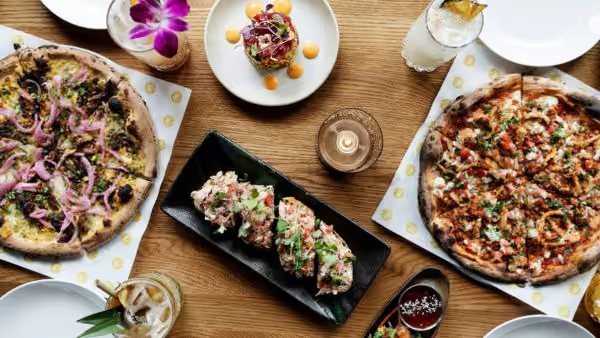
Behind the bar, the kitchen got its own upgrade. Hops & Berry relied on food trucks when it opened, and the kitchen, equipped with only an oven, has since built a menu of flatbreads, bruschetta, nachos and other sharable appetizers.
Before GoTab, orders were printed on paper tickets only. When the bar got slammed and a ticket went missing or a plate landed at the wrong table, staff had to dig through the trash to find it. The GoTab KDS now keeps every order on screen, and staff can scroll back an hour to pull up any ticket in seconds.
“I will never, ever go back to using paper tickets for food. That screen has been the greatest thing we’ve ever used. Our kitchen manager has been in the industry for 15 years. He was against the screen at first, and now he says GoTab is one of the best systems he’s ever used back there.”
— Kim Bailey
Closing time changed just as much. On nights like Halloween and the Fourth of July, dozens of guests walk out without closing their tabs. GoTab now closes them automatically at the end of the night, and Jill estimates the feature saves the team at least an hour on its busiest nights.
The newest members of the team never had to learn the old way at all.
“Our new employees hear us talk about the old system, and they say they don’t even know what we’re talking about, because this system is amazing. I tell them they don’t know the trenches we were in before.”
— Kim Bailey
Powerful Tech, No Technical Background Required
Pourtek’s screens are where the concept comes to life. Corcoran built the platform on Unity, a gaming engine used to create video games, so the wall behaves less like a menu board and more like an interactive display. Cans spin in 3D so craft beer fans can study the label art, and a sold-out wine bottle tips over and lies flat so guests can see at a glance what’s unavailable.
“Everything is just like an Xbox. You can animate things and make them 3D.”
— Mark Barnett
Each tap also displays a flavor profile, where the drink comes from and its price per ounce, plus national ratings from Untappd through an integration Corcoran built. The screens also change with the calendar, and the bar can customize them for private events booked at the taproom.
“We’ve got the Halloween theme up right now, but you can put anything behind it, from Fourth of July fireworks to Santa Claus to shamrocks. If we have a graduation party, we can put the graduate’s photo behind the screens for the night, and people really dig that.”
— Mark Barnett
Behind the scenes, staff run the entire wall from a small cloud-based handheld device Corcoran designed, rather than a desktop workstation. It shows the status of every faucet, how much is left in each keg and which drinks are running low. Changing a keg takes the push of a button, which puts that tap on hold until the new one is connected.
Jill believes it’s important for other operators to know they don’t need a technical background to run any of it.
“If Mark and I can do it, and we do over a million dollars a year in sales, anyone can do it. Don’t be intimidated by the technology. It’s actually much easier than you think.”
— Jill Barnett
Beyond the Wall: Mobile Self-Pour and a Team That Stays
Pourtek is also taking the concept on the road. Its mobile kegerators work like a self-pour wall on wheels, with two to eight taps and up to four screens. Each unit combines the cooler and draft lines in one cabinet roughly six to seven feet long at its largest, so venues can skip the big investment in a cooler and draft system behind a full wall.
Golf courses, country clubs, hotels, wedding venues and convention centers are buying the units outright rather than renting them, and Jill said they’re quickly gaining traction.
Back in Loveland, the bar’s regulars have become part of the business. Frequent guests get a leather key fob with their name on the back. After too many of those fobs got left at home, one regular built a rack and hung it at the bar, and about 20 now wait there for their owners to walk in.
Even with all the attention the technology gets, Jill gives the credit to Bailey and a team with almost no turnover.
“Honestly, the technology is cool, but if we didn’t have Kim, none of it would work. She’s the glue for this entire organization. Our location is amazing, but our people are really what make it happen.”
— Jill Barnett
More than four years in, the Barnetts still sound a little surprised by where the bar has taken them.
“My wife always says it’s changed our lives. We’re so involved in Loveland now, and we have all these new friends, and we didn’t expect any of that. We visited a lot of self-pour places before we did this, saw people’s genuine reactions and thought, ‘If we could do that in Loveland, we’ll do great.’ That’s exactly what has happened.”
— Mark Barnett
See What GoTab Can Do for Your Taproom
Self-pour technology gives guests an experience worth driving hours for, but only when the systems behind it work together. GoTab is a hospitality commerce platform that connects POS, QR ordering, payments and kitchen display in one system, and it integrates with technology partners like Pourtek so every pour, plate and payment lands on a single tab. Operators get faster check-ins, cleaner close-outs and real support when they need it, so staff can spend their time on guests instead of screens.
See how GoTab works as a brewery and taproom POS, or connect with the GoTab team to request a demo today.