





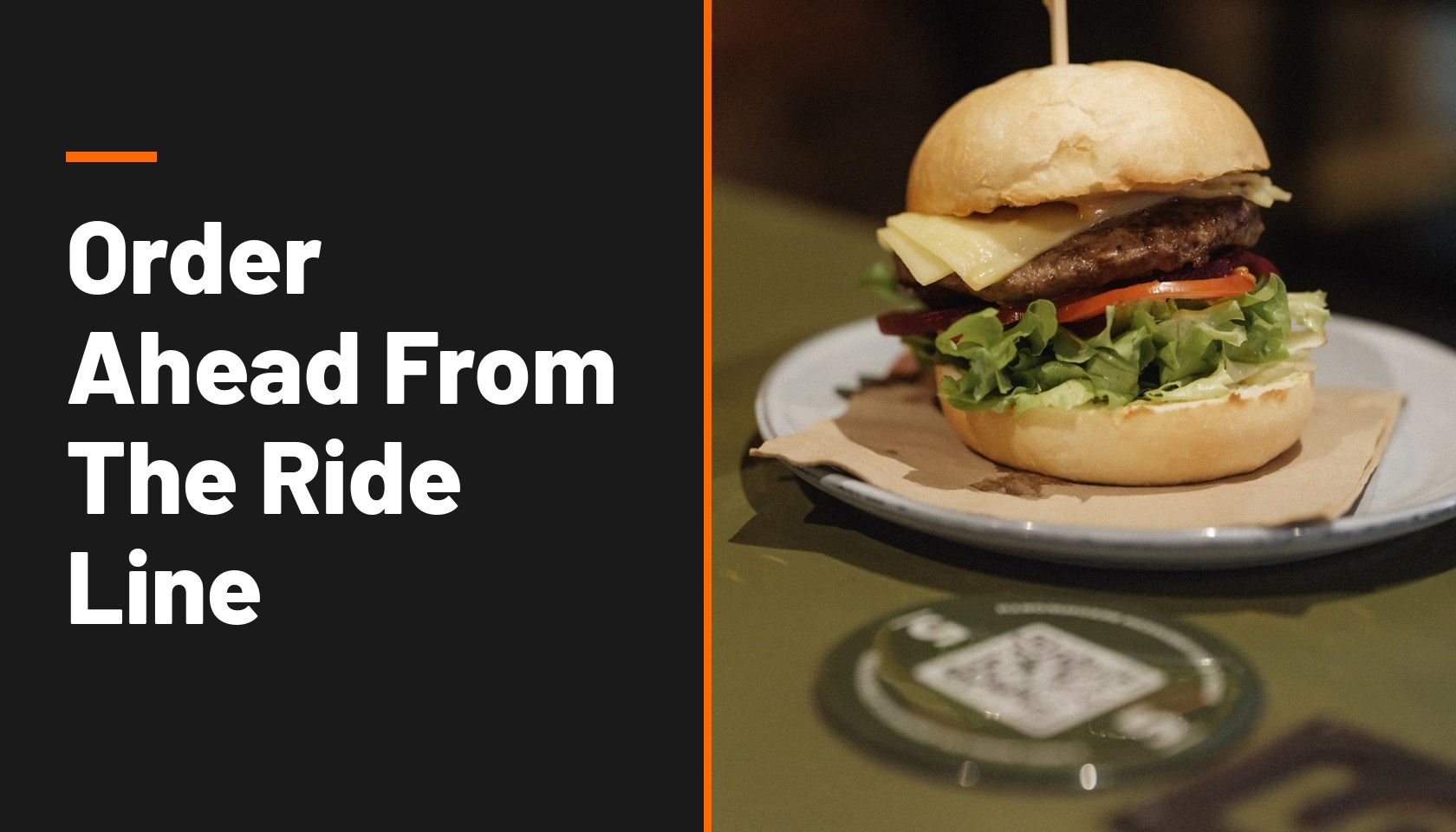
A family is twenty minutes into the queue for the go-karts when they decide they want lunch.
Today that means one of them leaves the line, walks to the grill, queues again, waits for the food, and carries it back — by which point the rest of the party has reached the front and is choosing between the ride and the meal. So the family eats in shifts, and somebody's lunch goes cold.
Order-ahead means the order is placed from where they are standing and collected when it is ready. That is a small change to the guest's afternoon and a large one to your throughput on a day when throughput is the thing you are short of.
What Does A Queue Actually Cost An FEC?
More than goodwill, and the cost is easiest to see on your best days rather than your worst.
A large seasonal attraction running ten to fifteen thousand guests on a good autumn Saturday, across twenty-odd food outlets, does not have a demand problem. It has a throughput problem. Demand arrives in a three-hour band and the constraint is how fast you can convert it. Every minute a register is occupied taking an order that could have been placed from a ride queue is capacity you have already paid staff and rent for and cannot use.
The second cost is quieter and larger. A queue does not just delay purchases, it cancels them. A guest who would have bought ice cream at three o'clock does not join a line twenty deep for it; they simply do not buy ice cream. You never see that transaction, which is precisely why it does not show up in any report as a problem.
Operators of large-footprint venues describe the same priority in almost identical terms: speed of service and clearing the lines. Not more menu, not more outlets. Clearing the lines.
Where Does Order-Ahead Work, And Where Does It Not?
It is not a general-purpose upgrade, and pretending otherwise is how venues end up with a channel nobody uses.
It works where guests have dwell time with their hands free — ride queues, bowling lanes, courts, tables, event rooms. Anywhere a guest is waiting anyway is a place an order can be composed at zero cost to them.
It works where the footprint is large enough that walking to a counter is a real decision. On a compact site the counter is thirty seconds away and the friction you are removing barely exists.
It works poorly for impulse items at the point of sale. Nobody pre-orders a soft-serve they decided they wanted half a minute ago. Those counters need to be fast, not asynchronous, and the fix there is a second till or a kiosk rather than a phone.
And it does not work at all where the network does not reach. Which sounds obvious until you notice that coverage is usually built for the buildings and the guest is standing in a queue outdoors.
What Has To Be True Before The First Order Fires?
Four conditions. The first one is the one venues skip and regret.
Payment is captured before the kitchen fires. If an order can reach the line before it is paid for, you will make food and pour drinks that nobody collects. Operators put this bluntly: a drink made against an order that then fails to pay is money straight down the drain, and unlike a plated item you cannot even hold it. Authorize first, fire second.
The order reaches the kitchen without a staff step. If a server has to receive a mobile order and push it through, you have not removed labour from the floor — you have moved it, and added a place for orders to sit unnoticed during a rush. QR ordering only pays off when the ticket routes itself.
The guest is told when and where. A ready notification without a location is useless on a large site. "Ready at the grill counter" is an instruction; "ready" is a puzzle, and a puzzled guest walks to the nearest staff member and asks, which is the labour you were trying to avoid.
The kitchen can see the channel mix. Counter, handheld, kiosk and phone orders arriving on one screen with no station routing does not remove a bottleneck, it relocates it. A kitchen display system that routes by station and tracks ticket times is what keeps the promise you just made to the guest.
How Do You Keep The Pickup Point From Becoming The New Queue?
This is the failure mode nobody warns you about. You remove the ordering line and quietly create a collection line, and the guest's total wait barely moves.
Three things prevent it.
Stagger the fire times rather than cooking everything on receipt. An order placed from a ride queue is not needed for ten minutes, and treating it as urgent burns capacity you need for the guest standing in front of you.
Separate the pickup point from the order counter, physically. If collection happens at the same window that is serving walk-ups, the two queues merge and you have gained nothing.
Be honest about ready times. Telling a guest twelve minutes and meaning it beats telling them five and missing by four. The guest who arrives early stands in your collection area making it crowded, which slows everyone behind them.
Who Does This Operational Approach Fit Best?
Order-ahead earns its keep in venues with attractions that create dwell time and a food operation that bottlenecks at peak. Ride queues, lanes, courts and event rooms are all places an order can be placed for free.
It fits especially well on large or seasonal sites with concentrated demand — the venue whose whole year turns on twelve Saturdays gains more from clearing a line than from almost any other change, because the capacity constraint only binds on those days and building more counter for them is expensive.
It fits poorly in compact venues with short queues, where the counter was never the problem, and it is premature anywhere guest-facing network coverage has not been checked at the places guests actually stand. Walk the queue with a phone before you scope the project. The mechanics of carrying one account across all of this are covered in one tab from the go-kart track to the grill, and the wider question of how many systems end up involved in why FEC tech stacks end up with six systems.
Want to see what order-ahead would do to your peak-day lines? Request a demo, or start with the complete FEC technology stack. It is also worth checking how this fits a family entertainment center POS before adding it as a separate channel.
FAQ
Does mobile ordering actually reduce wait times at an FEC?
It reduces them where guests have dwell time to place an order from — ride queues, lanes, courts, tables. It does very little for impulse purchases decided at the counter, and it can make things worse if the pickup point is not separated from the walk-up window, because the ordering queue simply becomes a collection queue.
Should a mobile order be paid for before it reaches the kitchen?
Yes. An order that can fire before payment is captured produces food and drinks nobody collects, and drinks in particular cannot be held or re-sold. Authorize first and fire second; the small delay is far cheaper than the waste.
Do staff have to push mobile orders through to the kitchen?
They should not have to. If a server has to receive and forward each mobile order, the labour has moved rather than disappeared, and orders can sit unseen during a rush. Orders should route themselves to the correct station on arrival.
What network coverage does order-ahead need at an outdoor attraction?
Coverage where guests actually stand, which is usually the queue rather than the building. Venue networks are typically built around structures, so test at the ride line, the lane, the court and the far end of the site before committing — a channel that fails at the point of use trains guests not to try it again.