






Five platforms dominate the enterprise restaurant POS shortlist: Oracle MICROS, PAR, Toast, NCR Voyix and Lightspeed. All five publish centralized menu management and multi-location reporting in near-identical language. Where they actually diverge is narrower and more consequential: none of the five describes franchise royalty collection, none authorizes card payments while offline, and none publishes a payment processing rate.
If you run more than a handful of restaurants, the shortlist you get handed is almost always the same five names. This page compares what each of them publishes about running many locations, alongside GoTab.
It scores published claims rather than demo impressions. A claim a vendor puts on its own site or documentation is one you can hold it to. Where a vendor's pages do not describe something, this page says so — which is a statement about the page, not about the product.
Disclosure: GoTab publishes this comparison and sells a competing product. Every competitor claim below is drawn from that vendor's own published pages or technical documentation, read in November 2026. Vendor pages change, and each claim links to its source.
How This Comparison Was Scored
Each vendor was scored on its own published pages and documentation as of November 2026. A capability counts only if the vendor describes it in its own words.
Company size was deliberately left out. Installed-base figures are published on different bases and at different dates across these vendors, and a location count does not tell you whether a platform does what your group needs. The questions below are the ones that change a rollout.
| Platform | Franchise royalty collection | Card payments during an outage | Published price | Published processing rate |
|---|---|---|---|---|
| Oracle MICROS | Not described on the pages cited | Stored, not authorized; issuer can refuse on reconnect | Contact sales | Not stated |
| PAR | Not described on the pages cited | Store and forward, with per-transaction and per-device caps | Contact sales | Not stated |
| Toast | Not described on the pages cited | No offline authorization; stored encrypted, swipe only, merchant bears declines | From $69/mo; no enterprise price published | Not stated |
| NCR Voyix | Not described on the pages cited | Store and forward; documentation calls it a "premature" authorization | Contact sales | Not stated |
| Lightspeed | Not described on the pages cited | Not real time; terminal falls back to standalone and needs a cell link | $69 to $399; no enterprise price published | Not stated |
| GoTab | Royalty deducted in increments as sales happen | Captured locally and submitted on reconnect; what pauses is published | $15 / $99 / $229 per location per month | From 2.40% + $0.15, card present |
Menus and Reporting Are Where Everyone Sounds the Same
All five vendors publish centralized menu management across locations, and all five publish multi-location reporting. If those are your criteria, this is not a decision — any of the six will clear the bar.
What varies is how much each commits to in writing. Toast describes the mechanic plainly: build one menu and it appears at any location you specify. NCR Voyix describes a single source of truth. PAR and Lightspeed state the capability without describing how it works.
Who Holds the Price When a Store Disagrees
This is the question underneath menu management, and almost nobody asks it during a demo.
GoTab publishes the core catalog once from a parent location and links products down to every store. Name, base price, display price and description stay with HQ. Where price has to vary by market, HQ defines a named scope and sets the price in it, and an authorized location admin selects that scope — the store chooses from prices HQ has already set rather than entering its own.
Locations keep control of what is genuinely local: station routing, tax rate, course assignment and inventory, plus per-store fields like staff notes, short name, prep time and POS color. One thing to know before a rollout: a force sync copies HQ's values back down and can overwrite those local fields, so it is a deliberate action rather than routine housekeeping.
That split is the point. A franchise system where any store can reprice a linked item is a brand-consistency problem, not a feature. The question worth asking any vendor on this list is not whether menus sync, but who holds the price when a store disagrees.
Franchise Royalties Are Where the Shortlist Goes Quiet
None of the five publishes a description of franchisee hierarchy or royalty reporting. Oracle states that it supports franchise restaurants. Toast states that it works with franchised brands and individual franchisees. Neither describes a franchise feature on the pages cited.
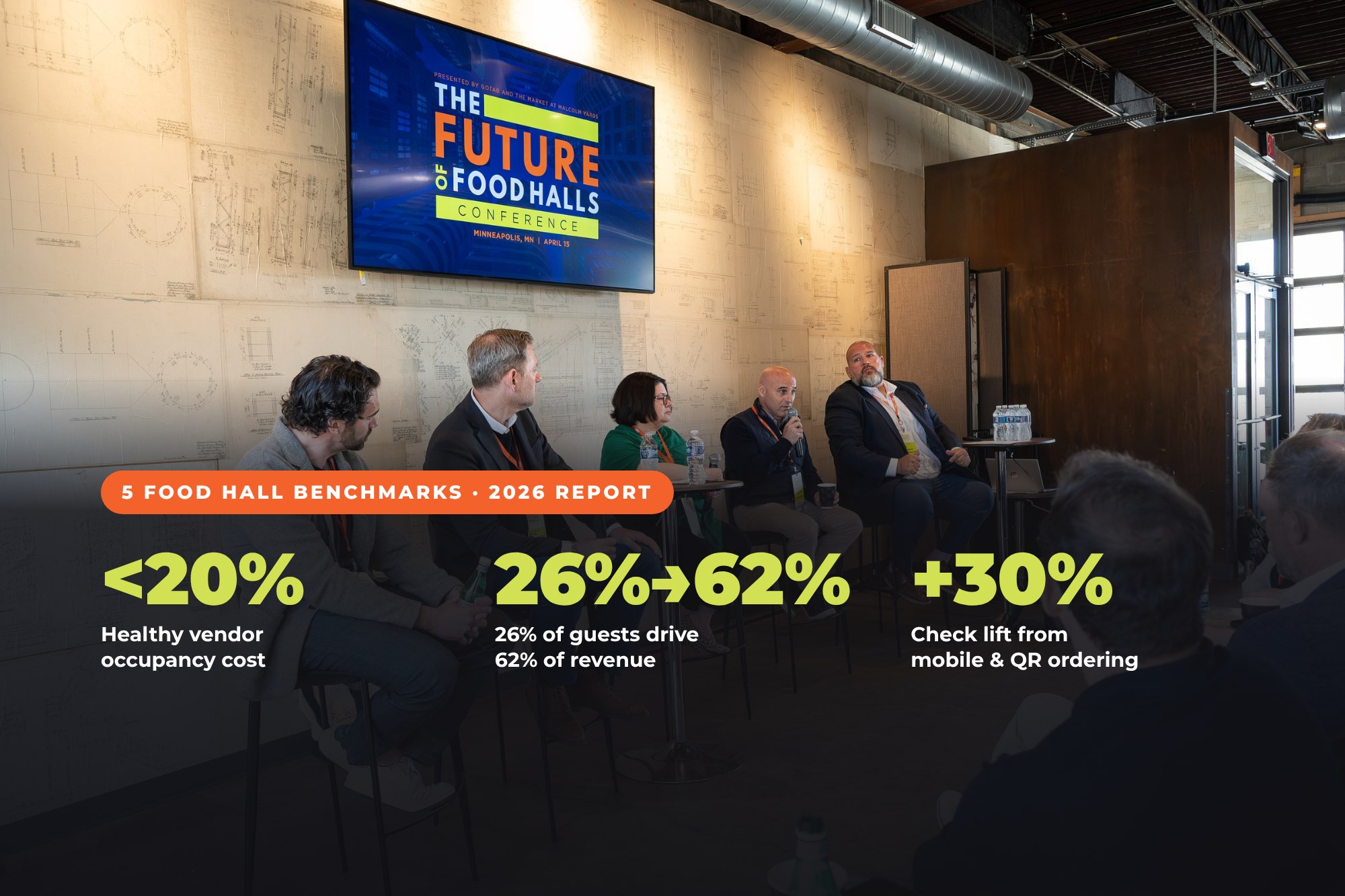
That matters because royalty collection is the operational problem franchising actually creates, and the normal setup does not involve the POS at all. Industry surveys describe a periodic pull from the franchisee's bank account — 77% of franchisors collect by EFT or ACH, 62% monthly against 31% weekly — calculated from sales the franchisee reports.
GoTab deducts the franchise fee in small increments as sales happen, so the amount owed comes off the sale that created it rather than being reconstructed from a report weeks later. Hoppin' Brands cited that as a reason for switching.
The gap is not how the money moves. It is whether the number behind it was reported or captured.
Every System Survives an Outage. The Question Is What Stops
Every platform here keeps a local tier so service survives a connection loss, and all five say so. Oracle's documentation states the design intent outright: its on-premise services exist to prevent internet failures from causing outages and functionality loss. So "does it have offline mode" is not a question that separates them. Two things do.
Can cards be authorized while disconnected? Mostly no, and the consequences are the operator's. Toast stores card data encrypted on the device and submits it on reconnect, swipe only, with the merchant bearing declines and disputes. Lightspeed's integrated payments stop being real time, and a card terminal with no cellular link will not function. Oracle warns that a stored payment can be refused by the issuer when the connection returns. NCR's own documentation calls its offline approval a premature authorization and states that transaction approval is never guaranteed. PAR applies per-transaction and per-device caps.
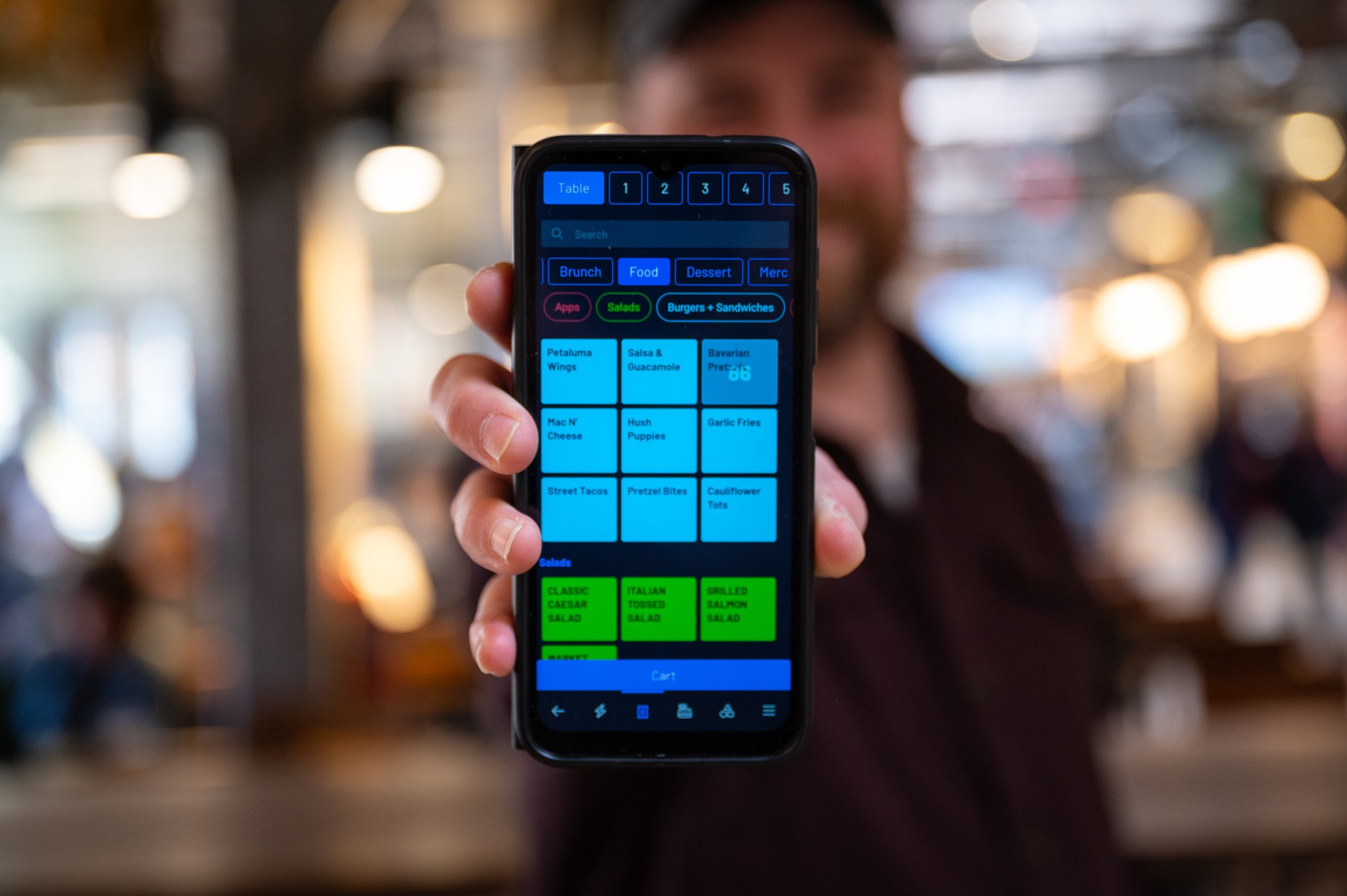
Which guest-facing channels go dark? Staff-facing ordering survives an outage almost everywhere. Cloud-dependent guest channels do not. GoTab's on-premise server keeps the POS, kitchen displays, handhelds and printers running and captures cards locally — and publishes what stops: QR ordering, mobile ordering, text messages and Tap to Pay on iPhone pause until the connection returns. Toast documents its own equivalent list precisely. Most vendors document neither.
If your venue runs on guests ordering from their phones, that list is the thing to compare — not whether the terminal in the corner stays on.
Three of Five Will Not Show You a Price
Toast and Lightspeed publish starting prices. Neither publishes an enterprise price. Oracle, PAR and NCR Voyix route enterprise buyers to sales.
None of the five publishes a payment processing rate. Three describe it in terms you cannot check — fixed fees, a simple flat rate, no hidden fees — and two do not mention it. GoTab publishes its rate: card-present processing starts at 2.40% + $0.15 for qualifying operators under $5 million in annual volume on Mastercard, Visa and Discover.
If a vendor will not show you the number before a call, that is worth knowing at the shortlist stage rather than the contract stage.
On contract length: standard GoTab agreements are two years and renew automatically year to year unless either side gives 60 days' notice. None of the five publishes its standard term.
Hardware: What You Buy Versus What You Already Own
Oracle describes proprietary workstations and tablets. Toast describes its own handhelds, kiosks and kitchen displays. PAR describes both its own terminals and hardware you already have. NCR Voyix and Lightspeed do not describe the proprietary-versus-bring-your-own question on the pages cited.
GoTab does not lock you to its hardware. It supports a range of third-party hardware and also runs on standard Android and iOS devices your staff already carry. The point is not that phones cost less than terminals. It is that the choice stays yours at every opening, rather than being set by the platform.
One Platform, Different Service Models Under One Organization
Most enterprise POS pitches assume your locations are copies of each other, and the published language is consistent on the point. Oracle describes corporate-level control enabling brand consistency across multiple locations. Toast describes assigning group- or individual-level settings from a single dashboard, with parameters set at the corporate level. For a chain of identical units, that is exactly the right goal.
It is the wrong goal for a group whose locations are not identical.
GoTab groups run different service models side by side under one organization. The Blind Horse replaced three separate POS systems and now runs five revenue streams across two locations on one platform. The Golden Mill runs food-hall vendor routing, where each tenant operates its own menu under a shared guest tab. The Little Pub Company runs 18 bars and two beer gardens on a hybrid model. Santa Anita Park moves between 5,000 guests on an average day and 110,000 for the Breeders' Cup, with QR covering 1,500 outdoor seats and 2,500 box seats. Elsewhere on the same platform: dine-in cinemas, pickleball clubs, self-pour taprooms with RFID passes, and hotel outlets charging to the room.
Counter service, table service, QR and mobile ordering, handhelds, kiosks, self-pour and vendor routing are the same platform and the same back office. A location runs the service model its market actually wants, while the group keeps one catalog, one set of reporting and one place to look.
This is a different claim from scale, and it is worth being direct about which one you need. If every location does the same thing the same way, a platform with six-figure deployment counts behind it is strong evidence that it will do that thing reliably. If your locations differ — by format, by daypart, by what guests in that particular market expect — the question is whether one platform can run all of them, or whether you end up with a separate system per concept and a spreadsheet to join them up.
Where GoTab Is Not the Right Fit
Every comparison published by a vendor should include this section, and most do not.
If your locations are identical and standardization at scale is the goal. The largest platforms here publish six-figure deployment counts, which is real evidence of running the same configuration in many places. GoTab is built for groups whose locations differ from each other. If yours do not, that flexibility is not something you need to pay for.
If your group runs on a Windows back office and on-premise infrastructure you intend to keep. Oracle MICROS is built for that and has been for a long time. GoTab is not the shorter path there.
If QR and mobile ordering are mission-critical during an outage. GoTab's on-premise server keeps the POS, kitchen and handhelds running, but guest-facing QR and mobile ordering pause until the connection returns. If guests ordering from their phones is how your venue works, that gap is yours to weigh.
If you want a published enterprise price before a conversation. Nobody on this list publishes one, GoTab included.
The Questions Worth Asking Any Vendor on This List
Most of these are answerable in a single email, and the answers separate the shortlist faster than a feature matrix will.
- Who can change a linked product's base price — HQ, a regional manager, or the store?
- If price varies by market, who configures that, and what does the store actually see?
- How are franchise royalties calculated and collected, and does the POS participate at all?
- Can cards be authorized during an internet outage, or only stored? Who bears a decline?
- Is there a cap on stored transactions, and a time limit before they expire?
- Which guest-facing channels stop working during an outage?
- What is the processing rate, and what qualifies a location for it?
- What is the standard agreement length, and what notice is required to leave?
Ready to see what an enterprise restaurant POS looks like in practice? Request a demo to walk through it with our team.