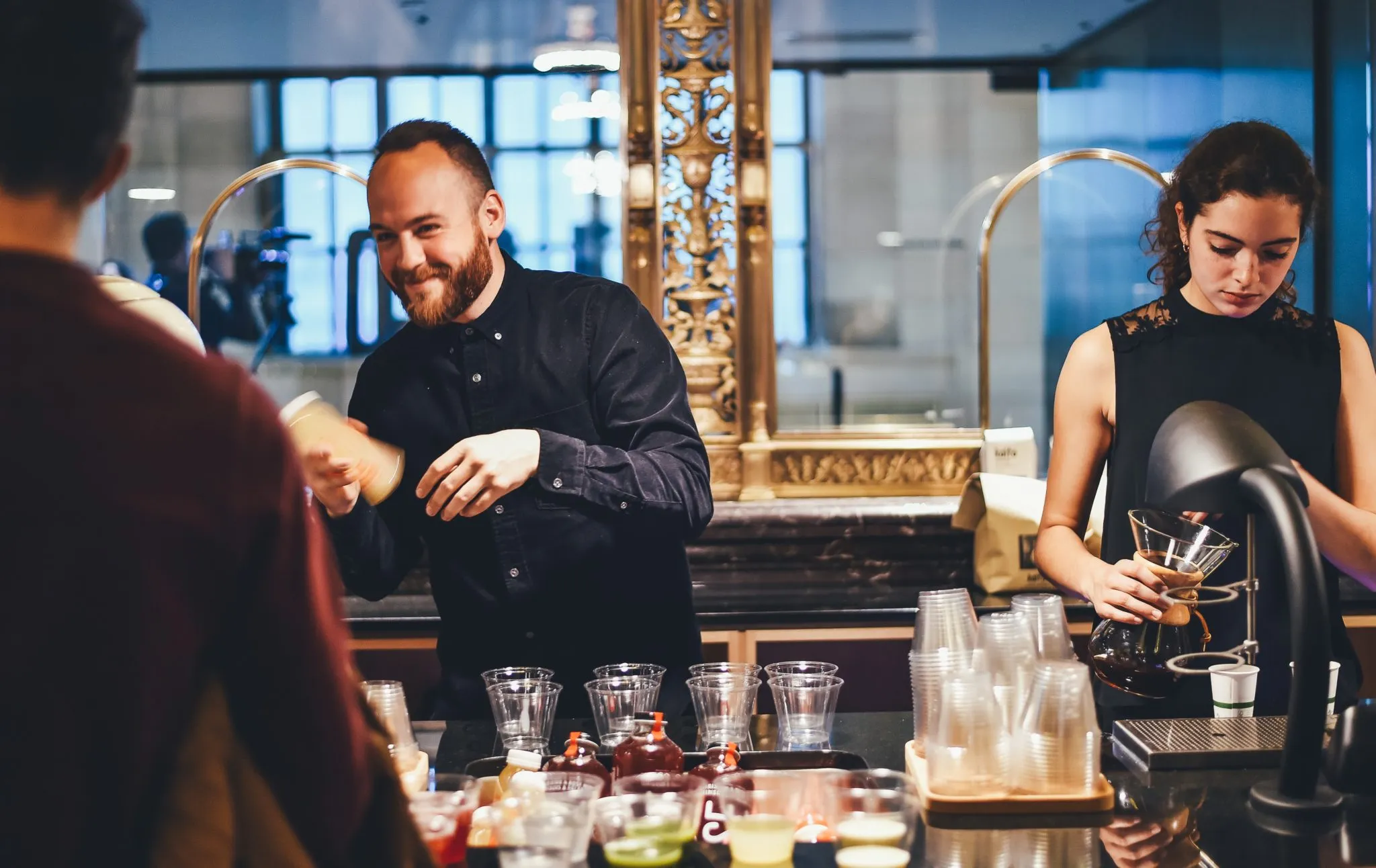






Here's a scenario that plays out in food halls more often than most operators realize: a group tab gets opened at the bar, the party orders food from two other vendor stalls and drinks from the bar, and when the tab closes, the entire tip lands in the bartender's tip pool — even though a kitchen team at another stall did most of the work. Nobody did anything wrong. The system just wasn't built to split a tip across vendors the way it splits the sale.
This is one of the least-discussed operational problems in multi-vendor venues, and it only shows up once a food hall is running shared tabs across zones — which is exactly the ordering model most guests actually want.
Why Mixed Tabs Break Standard Tip Pooling
Most labor and tip management systems assume a tip belongs to whoever's job code is tied to the order. That works fine in a single-concept restaurant. In a food hall, a single tab can span a bar, a counter-service stall, and a kitchen — each with different staff, different tip pools, and different employers in some cases. When that tab closes, standard integrations tend to pull the whole tip into whichever zone or job code the tab was opened under, rather than splitting it proportionally across every vendor whose items were actually on the check.
The result is a tip pool that's technically balanced — the numbers add up — but incorrectly balanced, with one team overcompensated and another undercompensated for the exact same guest visit.
The "Unassigned Tips" Problem
A second, related issue shows up when tabs get opened somewhere that isn't tied to a specific server at all — a welcome desk, a QR code order placed at the parent level, or any other entry point that isn't a named staff member. Those tips have nowhere correct to land, so they show up as "unassigned." Left unresolved, unassigned tips either disappear into a catch-all pool that dilutes everyone's share, or they sit unclaimed while the operator tries to figure out where they actually belong.
For a food hall running multiple ordering channels — counter service, QR ordering, kiosks, a bar, and catering — unassigned tips aren't an edge case. They're a predictable byproduct of exactly the ordering flexibility that makes a food hall work for guests.
Why This Matters More as a Food Hall Scales
A three-vendor food hall might absorb a few misallocated tips a month without anyone noticing. A food hall running a dozen vendors, a bar, and thousands of guest visits generates enough mixed-tab volume that even a small per-transaction error rate turns into real dollars — and real trust problems with staff who can tell, transaction by transaction, when a big group tab didn't land where it should have.
The right fix isn't a workaround an operator layers on top of their existing system — it's a POS that splits and routes tips correctly for multi-vendor tabs in the first place, with transaction-level reporting detailed enough to verify it.
What to Ask a POS Vendor About Tip Handling
- Can tips be routed to a central account for redistribution, or sent directly to the vendor whose staff actually earned them — or both, depending on how the venue is staffed?
- How does the system handle a single tab that includes items from multiple vendors when it comes to tip allocation?
- What transaction-level reporting is available to verify that tips landed with the right vendor and the right team, without operator intervention?
How GoTab Approaches Tip Handling in Shared-Service Environments
For food halls with central bars or pooled staff, GoTab supports routing tips to a central account for redistribution or directly to individual vendors, based on how the venue's service teams are actually structured — and gives operators the underlying transaction-level reporting needed to reconcile tip pools accurately across every vendor on a shared tab. Read more in our guide to GoTab's multi-vendor POS, or see how tip and remittance handling compares across providers in our food hall POS comparison.