




The best food halls feel alive - less food court, more community hub. Guests wander, explore different vendors, try new flavors, and stay longer than they planned. They meet friends, grab another drink, try another concept, and settle into the energy of the space. That kind of energy requires spaces that are intentionally designed for movement, discovery, and hospitality. One of the most important drivers of that experience today is the beverage program - beer, wine and spirits flowing at the right place and time to keep guests engaged.
It’s also one of the topics that will take center stage at the Future of Food Halls Conference 2026, taking place April 15 at The Market at Malcolm Yards in Minneapolis. During the session Pour Walls and Traditional Bar Setups, industry leaders will explore how beverage strategy is shaping the economics and guest experience of modern food halls.
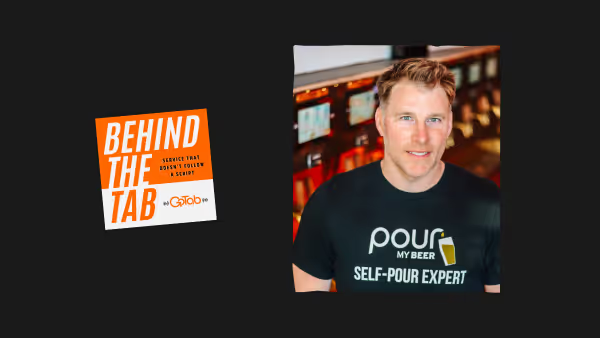
To preview that conversation, GoTab’s Adam Howe recently spoke with Josh Goodman, CEO of PourMyBev, on a special edition of the Behind the Tab podcast. The discussion offers a glimpse into the operational thinking that’s driving some of the most successful food hall concepts today.
Why Beverage Programs Are Becoming the Anchor of Food Halls
Because food halls operate differently than traditional restaurants; i.e., guests aren’t committing to a single concept. They’re exploring. They might start with tacos, move to ramen, grab dessert somewhere else, and return to the bar more than once throughout their visit. That movement makes beverage programs especially important.
In many successful food halls, beverage walls have become the center of gravity for the entire venue. They create a natural gathering point and make it easy for guests to start their visit with a drink before deciding what they want to eat. At venues like The Market at Malcolm Yards, guests often open a tab as soon as they walk in the door. From there, they receive an RFID card or wristband that allows them to move freely throughout the space—ordering food from vendors and pouring beverages without repeatedly pulling out a credit card. That single operational decision unlocks the entire experience. Guests can grab a drink, explore the food vendors, return for another beverage, and stay longer without friction.
The Data Behind the Experience
One of the reasons self-pour walls have become such an important topic for operators is the data. According to Goodman, analytics from venues using self-pour systems show that guests who interact with beverage walls tend to stay longer and spend more during their visit. In one dataset he shared, the average guest stayed roughly 60 minutes and generated 39 percent of total revenue while representing only 26 percent of visitors. The takeaway isn’t just about technology. It’s about behavior.
When guests have the freedom to explore and easily access beverages throughout the venue, they naturally extend their stay. And when dwell time increases, so does spending across the entire food hall. These kinds of insights are exactly what conference attendees will hear more about during the beverage panel session.
Designing Beverage Programs That Actually Work
Of course, technology alone doesn’t create a great experience. Layout and operational design matter just as much. One lesson operators have learned is the importance of clearly separating different beverage experiences.
Many food halls offer both a traditional bar and a self-pour beverage wall. When those two concepts sit too close together, guests can become confused about where to order and how the system works. Successful venues solve this by making the beverage wall highly visible as soon as guests enter the space.
When visitors walk into venues like Malcolm Yards or The Golden Mill in Colorado, they immediately see other guests interacting with the taps. That visual cue shows them how the system works without requiring a lengthy explanation. It also creates energy around the beverage program. Staffing plays an important role as well. Even in self-pour environments, hospitality remains essential.
Many venues place a “wall ambassador” near the taps to guide guests through the experience, recommend beverages, and answer questions. In brewery-focused concepts like District Brew Yards in Chicago, that ambassador may even be a brewer who can explain ingredients, styles, and new releases. Self-service doesn’t eliminate hospitality. It simply reallocates where service happens.
Efficiency Without Sacrificing Hospitality
Operational efficiency is another reason beverage walls are drawing attention from food hall operators. In one case study comparing a traditional bar with a self-pour beverage wall inside the same venue, Goodman said the self-pour setup generated four times the revenue while operating with roughly a quarter of the staff. For operators navigating labor shortages and rising wage costs, that kind of efficiency can be transformative. But the goal isn’t just reducing labor.
Self-pour systems also enable creativity. Operators can experiment with cocktails on tap, rotating craft beers, cold brew coffee, and even nitrogen-infused espresso martinis. Guests gain the ability to try small pours, explore new flavors, and interact with the beverage program in a way that feels more experiential. That sense of discovery is exactly what food halls are designed to create.
Continue the Conversation in Minneapolis on April 15
These ideas are only the beginning. At the Future of Food Halls Conference 2026, Goodman will moderate a panel that dives deeper into how operators are balancing beverage walls and traditional bar programs to create profitable, flexible hospitality environments.
The session will feature operators and industry leaders who are actively building and running some of the most successful food halls in the country. They’ll share real-world lessons about design, staffing, beverage strategy, and the operational systems that make these venues work.
If you’re building, operating, or investing in food halls, it’s a conversation you won’t want to miss.
Join us April 15 at The Market at Malcolm Yards in Minneapolis.
Explore the agenda and secure your ticket before the event sells out. Because the future of food halls isn’t just about what’s on the menu. It’s about designing experiences that keep guests exploring, gathering—and coming back for another round.
Building that kind of program takes more than better pours — see How Food Halls Increase Revenue with Smarter Beverage Program Strategies for the full strategy.
Self-pour and RFID integration are a big part of making that work operationally — see The Modern Food Hall Technology Guide.