




Restaurant technology is starting to feel a lot like data.
There’s more of it than ever. New tools show up constantly. Dashboards multiply. Integrations stack on top of integrations. And somehow, even with all that software, restaurants don’t always run better.
Just like data, restaurant technology isn’t useful just because it exists. It only matters when it’s clean, connected, and actually used the right way.
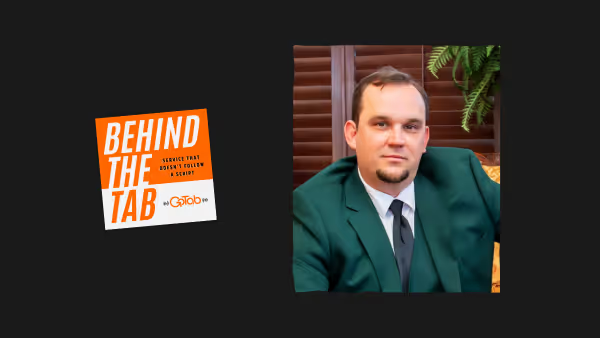
That idea came through loud and clear in a recent Behind the Tab podcast interview with Seth Burtis, COO of 5&5, a team that works hands-on with restaurant brands to implement and manage technology across real operations.
The big takeaway was simple: Restaurant technology doesn’t fail because it’s bad. It fails because it isn’t owned, managed, or adopted properly.
Technology Alone Doesn’t Fix Operations
Buying new software won’t fix a broken process.
Many restaurants invest in strong tools but don’t have the time or staff to manage them well. Menus don’t update correctly. Prices are wrong. Orders don’t flow cleanly to the kitchen. Integrations quietly break.
These small issues add up fast. One mistake during a rush can slow service, frustrate staff, and hurt sales.
As discussed on the podcast, technology only works when someone truly owns it—testing it, updating it, and making sure it supports how the restaurant actually runs.
If your systems feel fragile or overly complex, this is where an integrated POS platform matters.
Why More Restaurants Are Using Fractional Support
Most restaurants are running lean teams. Hiring is hard. Budgets are tight. Adding a full-time technology role often isn’t realistic. That’s why many operators are turning to fractional or managed support. Instead of hiring more staff, restaurants bring in experienced partners who act like part of the internal team. This kind of support often helps with:
- Menu and pricing updates
- New technology rollouts
- Testing and quality checks
- Ongoing fixes and optimization
The goal isn’t to replace staff. It’s to keep systems running smoothly without adding headcount.
Platforms built for modern restaurants reduce the need for constant manual fixes.
Operator Pushback Is Normal and To Be Expected
Operators are often labeled as resistant to change. In reality, most operators aren’t against change. They’re against change that makes their job harder.
Kitchens move fast. Staff rely on habit and muscle memory. If a new system slows them down or adds confusion, frustration shows up immediately. Change usually fails when:
- Staff aren’t trained properly
- The reason for the change isn’t clear
- New tools interrupt workflow without helping
When change is supported, explained, and clearly useful, operators are far more open to it.
Technology should adapt to how your team works—not the other way around.
Link to: GoTab hybrid service model or operations-focused content
Start With the Guest Experience
One of the strongest points from the podcast was this: Good technology decisions should start with the guest. Ask yourself:
- Is online ordering easy to use?
- Can guests find what they want quickly?
- Are loyalty rewards simple to redeem?
- Do orders arrive correctly and on time?
Today’s guests won’t fight with broken technology. If ordering feels hard or confusing, they won’t complain. They’ll just go somewhere else.
Most Restaurants Are Using Too Much Tech
Another issue that came up in the conversation is overlap. Many restaurants pay for multiple systems that do the same thing:
- Several ordering platforms
- Duplicate menu tools
- Features that were purchased but never fully used
This creates higher costs and more chances for failure. In many cases, simplifying the tech stack leads to better results than adding more tools. Just like messy data creates bad insights, messy tech stacks create bad operations.
An open platform with real integrations beats a pile of disconnected tools.
Involve Managers Before You Buy
One of the biggest mistakes restaurants make is choosing technology without manager input. Owners and corporate teams may like how a tool looks on paper. Operators know whether it will actually work during a lunch rush. Operators understand:
- Kitchen flow
- Staffing limitations
- Training challenges
- Real service pressure
When operators are involved early, adoption improves. When they aren’t, even good tools get ignored or removed.
Systems designed with operators in mind drive higher adoption.
COVID Changed the Rules for Good
Before 2020, online ordering and loyalty were optional. Today, they’re expected. The pandemic forced restaurants to handle:
- Multiple order channels
- Delivery and pickup at scale
- Real-time kitchen coordination
What hasn’t changed is this: If systems fail during service, everything breaks down fast. Reliability matters more than fancy features.
Uptime and continuity are no longer optional.
The Rise of Labor-Saving Technology
With labor costs rising, many restaurants are revisiting tools like:
- Kiosks
- AI-powered drive-thru
- More digital ordering options
As discussed on the podcast, these tools work best when they are reliable, easy to use, and clearly save staff time. Guests will use technology when it works—and expect a human when it doesn’t.
Labor-saving tech only works when it’s integrated into the full operation.
What Winning Restaurants Do Differently
The restaurants succeeding today aren’t chasing every new platform. They focus on:
- Simple, well-connected tech stacks
- Clear processes and training
- Operator involvement at every step
- Technology that supports real workflows
Good technology should fade into the background. It should help staff serve guests better—not demand attention during a rush.
The Bottom Line
This Behind the Tab conversation reinforced a simple truth:
More technology doesn’t mean better operations. Better-managed technology does.
For restaurant owners and operators, the goal isn’t to be the most high-tech restaurant.
It’s to run a smooth, reliable operation where technology quietly supports great hospitality.
If your tech stack feels bloated, fragile, or hard to manage, it may be time to rethink the foundation. Contact Us to talk to an expert.