




Craft brewery operators have never had more technology options available to them. Every week seems to bring a new platform promising to increase guest traffic, improve loyalty, automate marketing, streamline operations, reduce labor costs, or unlock new revenue streams. From AI-powered tools to mobile ordering platforms, reservation systems, loyalty programs, digital signage, and analytics dashboards, the number of choices can feel overwhelming. The challenge is determining which technology actually helps your business.
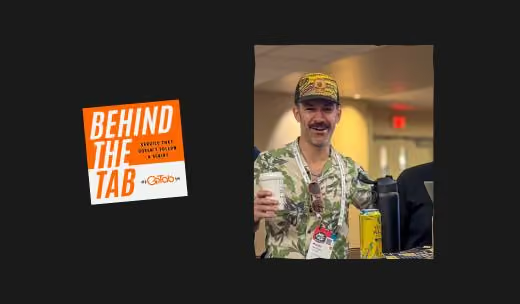
That was one of the central themes of a recent Behind the Tab conversation with Mike Wakerly, founder of Taplist.io, a digital menu and signage platform used by breweries, bars, and restaurants across the country. His advice was refreshingly simple. Every brewery operator needs a technology BS meter.
Start With the Problem, Not the Product
One of the biggest mistakes operators make when evaluating technology is starting with the solution instead of the problem. A vendor walks through the door with a new platform. The demo looks impressive. The features sound exciting. The promises are compelling. But before evaluating the software, operators should ask a much simpler question: What problem am I actually trying to solve? Do you need to improve guest flow? Increase repeat visits? Reduce operational friction? Make menu updates easier? Improve communication with guests?
Technology should always be evaluated against a specific business challenge. If the problem isn't clearly defined, it becomes nearly impossible to determine whether the investment is worthwhile.
Demand Proof, Not Promises
Hospitality operators hear bold claims every day. "We'll increase your guest traffic." "We'll help you sell more beer." "We'll improve loyalty." "We'll increase revenue." Maybe. But how? And more importantly, can they prove it?
One of the strongest points from the conversation was the importance of measurable outcomes. Operators should be skeptical of any technology vendor that can't clearly explain how success will be measured. The best vendors don't simply promise results. They show evidence, customer examples, benchmarks, and clear metrics that demonstrate value.
Technology investments should be evaluated the same way operators evaluate any other business decision: through measurable outcomes.
The Best Operators Lean Into What Makes Them Different
Interestingly, when asked what separates top-performing operators from everyone else, Mike didn't immediately talk about technology. He talked about differentiation. Some breweries win because they have exceptional beer. Others become community gathering places. Some create unforgettable outdoor spaces. Others thrive because of events, entertainment, food, or hospitality. The strongest operators understand exactly why guests choose them over alternatives. That understanding influences everything from service models and marketing to technology investments and physical design. Technology should reinforce what makes a business unique—not make it look like everyone else.
Why Open Ecosystems Matter
Another theme that emerged during the conversation was the growing importance of integration. Many hospitality technology providers pursue an all-in-one approach, attempting to offer every feature under a single platform. While that sounds appealing, it often creates tradeoffs. No company can be the best at everything. The alternative is an open ecosystem approach, where specialized solutions work together through integrations.
This allows operators to select the best tool for each function while maintaining a connected technology stack. For brewery operators, flexibility matters. Business needs evolve. Guest expectations change. New technologies emerge. The ability to adapt without replacing an entire system can become a significant competitive advantage over time.
Don't Forget the Guest
Technology conversations often focus on operations, but the guest experience should remain at the center of every decision. The most successful technology investments remove friction. They make it easier to order. Easier to discover products. Easier to pay. Easier to return. Sometimes that means implementing a new solution. Sometimes it means simplifying an existing process. And sometimes it means doing nothing at all. Not every trend needs to be adopted.
Feedback Is Still One of the Most Valuable Tools
Perhaps the most practical advice from the conversation had nothing to do with software. It was about feedback. Operators are busy. There are always more urgent tasks competing for attention. Brewing schedules, staffing challenges, inventory management, events, and maintenance all demand immediate focus.
Yet many of the most important opportunities for improvement come directly from guests. The operators who continue to improve are the ones who make time to listen. That doesn't mean every piece of feedback is correct. It doesn't mean every suggestion should be implemented. But it does mean creating opportunities to understand how guests experience your business. Technology can provide data. Guests provide context. Both matter.
Building a Better Brewery Business
The craft beer industry continues to evolve. Growth may look different than it did a decade ago. Competition remains intense. Margins remain under pressure. But the breweries finding success today share a common characteristic. They're intentional. They understand what makes them different. They focus on guest experience. They invest in tools that solve real problems. And they aren't afraid to question whether the latest technology trend is actually worth pursuing.
That's where a good BS meter comes in. Because in hospitality, the best technology isn't the newest technology. It's the technology that helps operators deliver a better guest experience and run a better business.