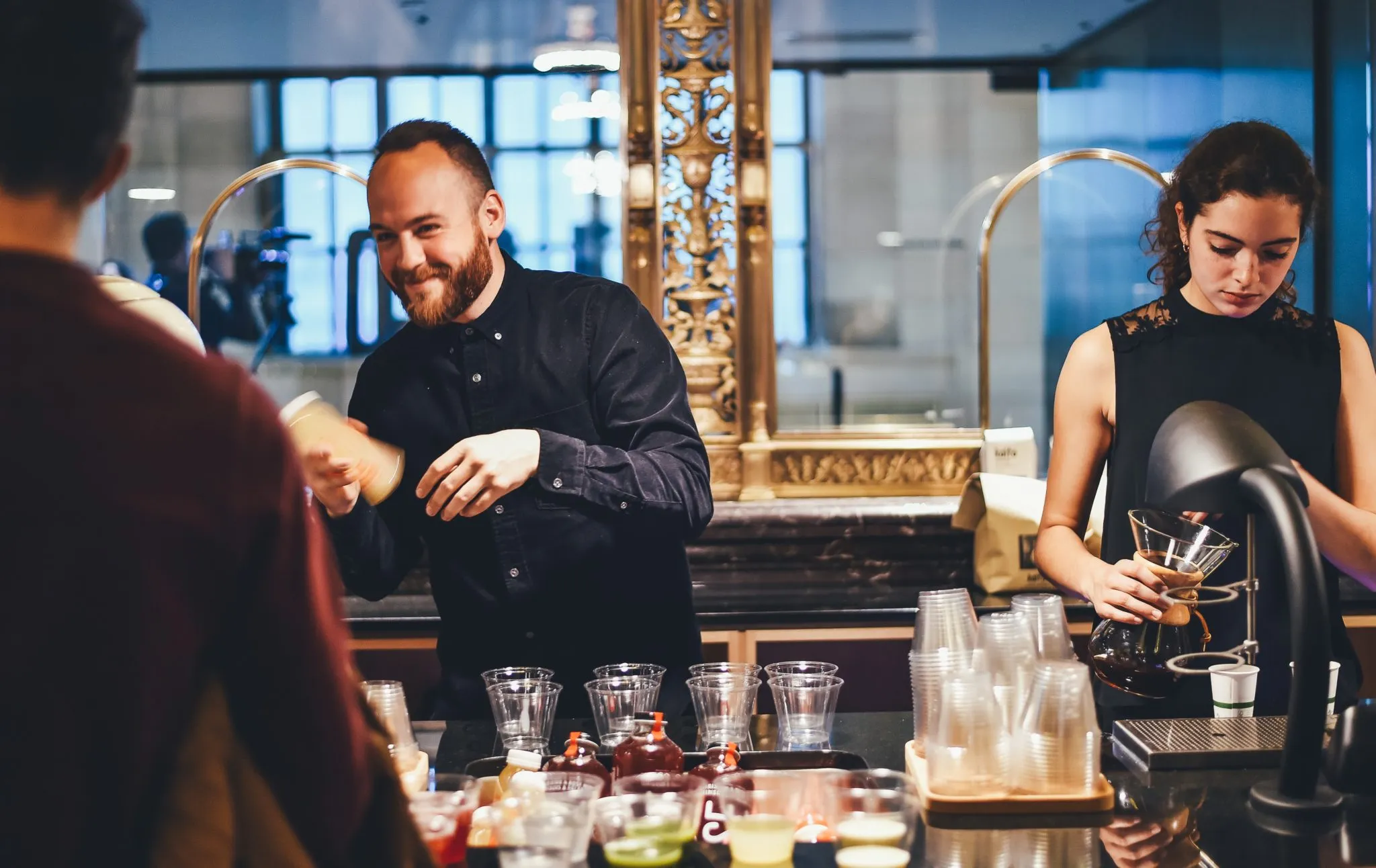






For years, brewery operators have debated which service model works best: traditional bar service, counter service, tableside ordering, or mobile ordering.
That may be the wrong question.
At ISM Brewing & Kitchen in Long Beach, California, guests don’t have to commit to one way of ordering. They can begin a tab with a bartender, reorder from their phone, place an order with a team member carrying a handheld, or skip the line and start at a table. Most importantly, they can move between those ordering methods without starting over.
For owner Ian McCall, that flexibility helps the brewery serve guests the way they naturally socialize—not the way a rigid point-of-sale workflow expects them to behave.
When the Technology Doesn’t Follow the Guest
Before opening ISM in November 2023, McCall spent nearly two decades in brewing. He understood production schedules, raw materials, inventory, and the work required to make great beer. When he purchased the former Beachwood Barbecue and Brewing location in downtown Long Beach, he also took on something new: a full restaurant operation.
The venue had shifted from full service to a more casual counter-service model. As business grew, lines began to form. Guests sometimes found themselves standing at the back of a line with a nearly full beer just to make sure they could get their next one.
The brewery had QR code ordering, but each QR code was tied to a specific table. That created another problem. A guest might start at a patio table, then move when friends arrived and the group needed more room. Their tab—and the location attached to their food orders—stayed behind.
“We weren’t keeping up with the flow of social interaction and the community,” McCall said.
That observation gets to the heart of brewery hospitality. Unlike a traditional restaurant, a taproom is rarely a static experience. Guests arrive at different times. Groups expand and contract. People move between the bar, patio, games, events, and larger tables. A service model that locks every order to a seat can create confusion for staff and friction for guests.
A Tab That Moves With the Party
With GoTab, ISM connects the guest’s tab to their phone number rather than permanently attaching it to one table. Guests can start at the bar and receive access to the same tab on their phones. If they move, the ordering flow can confirm their new location so food reaches the right table.
As McCall put it, people can “grow, expand, and contract their parties as they wish.”
That makes the service model better suited to the spontaneous way people use brewery spaces. It also helps ISM maintain one continuous guest relationship instead of creating multiple checks as someone moves around the venue.
For breweries evaluating a more flexible service model, GoTab’s brewery POS platform brings staff-assisted and self-directed ordering together so tabs, orders, and guest activity remain connected across the experience.
Hybrid Ordering Is About Choice, Not Replacement
Mobile ordering is sometimes positioned as a substitute for employees. ISM takes a different approach.
Some guests want to sit down, scan a QR code, and order with minimal interaction. Others prefer speaking directly with a bartender. Regulars may usually order at the bar but switch to mobile ordering when they see a line. During the same visit, a guest might use all three options.
ISM supports hybrid service models with:
- Traditional ordering at the bar.
- QR and mobile ordering from a table.
- Handheld POS devices used by food runners and other team members.
- A shared tab that remains accessible across ordering channels.
This “choose your own adventure” model preserves the human side of hospitality while removing unnecessary waiting. Employees are still available to answer questions, make recommendations, and build relationships. Guests simply do not have to find a particular employee or return to a specific ordering point every time they want something.
The Beer That Never Gets Ordered
Ordering friction has a revenue cost, even when it never appears in a report.
Imagine a guest sitting with friends who all have full beers. The guest might want another round, but not enough to stand in line alone. They wait until someone else is ready—or decide against ordering altogether.
That unplaced order may represent $5, $7, or $10 that the brewery never sees. Multiply it across busy evenings, crowded patios, and high-volume events, and the opportunity becomes significant.
By letting guests order when the impulse occurs, breweries can capture purchases that a line or an inconvenient ordering process might suppress. Staff can also add items to the same tab from a handheld when they are already interacting with the table.
The objective is not to push every guest toward a screen. It is to make sure the preferred ordering path is available when the guest is ready to buy.
Better Service Can Also Reduce Transaction Complexity
A connected tab can benefit the operation behind the scenes as well.
When a guest scans a new QR code and starts a separate transaction every time they move, the brewery may incur additional transaction costs and create more checks for employees to manage. GoTab’s Easy Tab® flow allows guests to begin a card-present tab at the bar, access it from their phone, continue ordering, and close remotely while keeping the experience connected.
That combination can reduce unnecessary transactions, simplify reconciliation, and offer more favorable processing economics than standalone card-not-present mobile transactions.
Hospitality Should Adapt to the Guest
The most effective brewery service model may not be bar service, QR ordering, or handheld ordering by itself. It may be an integrated model that allows each of them to work together.
ISM Brewing’s experience illustrates a simple principle: guests should not have to learn the internal logic of a venue’s technology to have a good time. The technology should accommodate the way guests gather, move, and order.
For breweries with busy bars, large patios, private events, or guests who rarely remain in one place, that flexibility can mean shorter lines, fewer missed orders, and a more natural hospitality experience.
Explore how GoTab’s brewery POS supports hybrid ordering, shared tabs, memberships, events, and open integrations for modern breweries and taprooms.