




Restaurant service has changed—permanently. Guests expect flexibility. Operators need efficiency. And labor shortages and high costs demand smarter systems, not more headcount.
That’s where the hybrid service model comes in. Hybrid service blends the best of full-service hospitality with the speed, convenience, and scalability of self-service and digital ordering. It allows guests to engage how they want—at the table, at the bar, on their phone, or with a staff member—without forcing operators to juggle multiple systems or workflows.
To help operators implement this model successfully, GoTab created the Restaurant Hybrid Service Model Implementation Guide—a practical, operator-informed roadmap for building flexible service without sacrificing hospitality.
What “Hybrid Service” Looks Like in Practice
Hybrid service isn’t about replacing staff with technology. It’s about removing friction—for guests and teams. In a hybrid model:
- Guests can open and manage a tab digitally or with a staff member
- Ordering works seamlessly across mobile, POS, handhelds, and kiosks
- Staff focus on hospitality, not transaction management
- Operations stay consistent—even during peak volume or connectivity issues
This flexibility is especially powerful in high-traffic, experience-driven venues: neighborhood pubs, destination bars, hotel restaurants, breweries, and entertainment concepts. The guide breaks down how to design, staff, and support hybrid service models that scale—without confusing guests or burning out teams.
Real Operators, Real Results: Hybrid Service in Action
The most compelling proof of hybrid service comes from operators already using it to run smarter businesses.
Little Pub Company: Neighborhood Hospitality at Scale
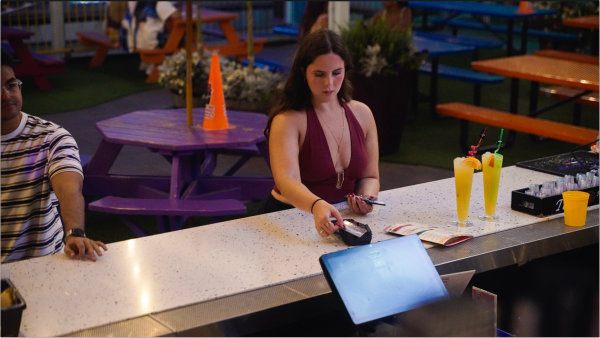
For Little Pub Company, operating beloved neighborhood bars across Denver means balancing community vibes with operational consistency. By implementing GoTab’s hybrid service approach, their teams empower guests to open tabs digitally while preserving the bar-first experience that regulars love.
The result? Faster service during rushes, fewer bottlenecks at the bar, and more time for bartenders to engage with guests—not manage payments. Hybrid service allows Little Pub to scale without losing its soul.
Garfinkel’s: Turning 30 Years of Hospitality into a High-Tech Advantage
At Garfinkel’s in Vail, Colorado, hybrid service supports extreme peak volume—ski season crowds, après-ski rushes, and packed patios—without overwhelming staff.
By blending mobile ordering, open tabs, and staff-led service, Garfinkel’s delivers speed when it matters most while maintaining the personal touch they’ve built over decades. The technology fades into the background, allowing experience to lead.
Hotel Alma San Juan: Luxury Meets Flexibility
In hospitality-driven environments like Hotel Alma San Juan, hybrid service isn’t about speed alone—it’s about choice.
Guests can order poolside from their phones, open tabs at the bar, or engage staff for a traditional dining experience—all within a single, unified system that integrates with their Stayntouch PMS. This flexibility elevates guest satisfaction while simplifying operations across outlets.
The Phoenix Taproom & Kitchens: A Purpose-Built Hybrid Model
The Phoenix Taproom & Kitchens was designed around hybrid service from day one. Multiple ordering modes, shared guest tabs, and vendor-level reporting all coexist in one platform—allowing the venue to handle volume without chaos.
Their success underscores a key takeaway from the guide: hybrid service works best when it’s intentional, not bolted on.
The Tools That Power Hybrid Service—Without Compromise
The guide goes beyond theory. It outlines the exact tools operators need to execute hybrid service effectively:
Easy Tab® gives guests a seamless way to open and share tabs—digitally or with staff—without slowing service or increasing walkouts.
Open integrations enable hybrid service that works best because your tech stack works together. GoTab’s open API and partner ecosystem integrate with best-in-class tools for events, self-pour, loyalty, accounting, and more.
Always-On Reliability with GoTab Sync ensures hybrid service doesn’t stop if the internet does. GoTab Sync keeps POS, ordering, and payments running even during outages—no crash kits required.
Why the Right Hybrid Model Changes Everything
Operators who implement hybrid service thoughtfully see:
- Higher throughput without adding labor
- Shorter wait times and fewer abandoned orders
- Happier staff focused on hospitality—not admin
- Guests who feel in control of their experience
But success depends on execution.
That’s why the Restaurant Hybrid Service Model Implementation Guide walks through:
- Choosing the right service mix for your concept
- Designing workflows that staff actually follow
- Avoiding common hybrid pitfalls
- Measuring success beyond speed alone
Build the Service Model Your Guests Expect
Hybrid service isn’t a trend—it’s the foundation of modern hospitality. Whether you’re operating a neighborhood bar, a destination venue, or a multi-outlet restaurant group, the right hybrid model lets you serve more guests, more gracefully. Download the Restaurant Hybrid Service Model Implementation Guide and start building a service experience that works for today—and scales for what’s next. https://gotab.com/guides/restaurant-hybrid-service-model-implementation-guide