






Every food hall operator budgets for vendor turnover. Almost none of them catch it early enough to prevent it.
Vendor failure rarely happens overnight. Sales decline for a few weeks before they decline for a few months. Engagement drops — a vendor stops joining hall-wide promotions, stops updating their menu, starts closing early on slow nights. By the time an operator treats it as a problem, it's often already a lease-renewal conversation instead of a save. The cost of that lag is real: a vacant stall means weeks of lost rent and service fees, a kitchen re-buildout that runs $150 to $350 per square foot in hard construction costs alone, and a visible gap in the guest experience while the search for a replacement drags on. (For the fuller picture of how food halls operate financially, see our Complete Guide to Modern Food Halls.) But the more useful question isn't what turnover costs — it's why it so often gets caught too late to prevent.
Turnover Is a Relationship Problem Before It's a Financial One
The operators who keep vendors longest aren't the ones with the best lease terms. They're the ones who treat the vendor relationship as ongoing, not transactional — checking in before a renewal date forces the conversation, not after.
That means having the direct, sometimes uncomfortable conversation early: “Your numbers have dropped over the last two months — let's figure out why, together.” That conversation only works if it's transparent in both directions, and it starts with the same payment and reporting transparency we cover in How Do I Get My Food Hall Vendors to Pay Me on Time? Show the vendor how their sales compare to similar stalls in the hall. Ask what's changed on their end — staffing, cost of goods, a menu item that stopped moving. And come with something concrete to offer, not just concern:
Operationally, that might mean adjusting portion sizes or pricing against what's actually selling, simplifying a menu that's grown too complex to execute quickly during a rush, or shifting staffing to match the hall's actual peak hours instead of the vendor's assumptions about them. From a marketing standpoint, it might mean getting the vendor into the hall's social content rotation, pairing them with a cross-promotion alongside a stronger-performing neighbor, or making sure their menu is actually easy to find and order from digitally — a surprising number of underperforming vendors are invisible in exactly the channel where most guests are ordering.
None of this works if the operator only finds out a vendor is struggling when they say so. It works when the operator can see it first.
Why a Standardized Tech Stack Makes This Possible
This is the part that's easy to underestimate: an operator can only have this conversation early, and back it up with real comparisons, if every vendor is running on the same underlying platform. When vendors are each on their own disconnected ordering and POS setup, an operator is stuck asking for numbers instead of already having them — and by the time those numbers get shared, the window to intervene early has usually closed. This is the core case for a connected platform we lay out in the Modern Food Hall Technology Guide and in What Is the Best Ordering Model for a Food Hall?
A standardized stack does two things at once. It gives the operator a consistent, real-time view across every vendor, so a decline shows up in the data before it shows up in a vendor's frustration. And it gives the guest a consistent experience moving between vendors — the same ordering flow, the same tab, the same checkout — instead of a food hall that feels like five different, disconnected businesses that happen to share a roof. Guest experience and early-warning visibility turn out to be the same underlying problem: a fragmented tech stack breaks both at once. (See how this comes together on our Food Hall POS page.)
Don't Let Events Be an Afterthought
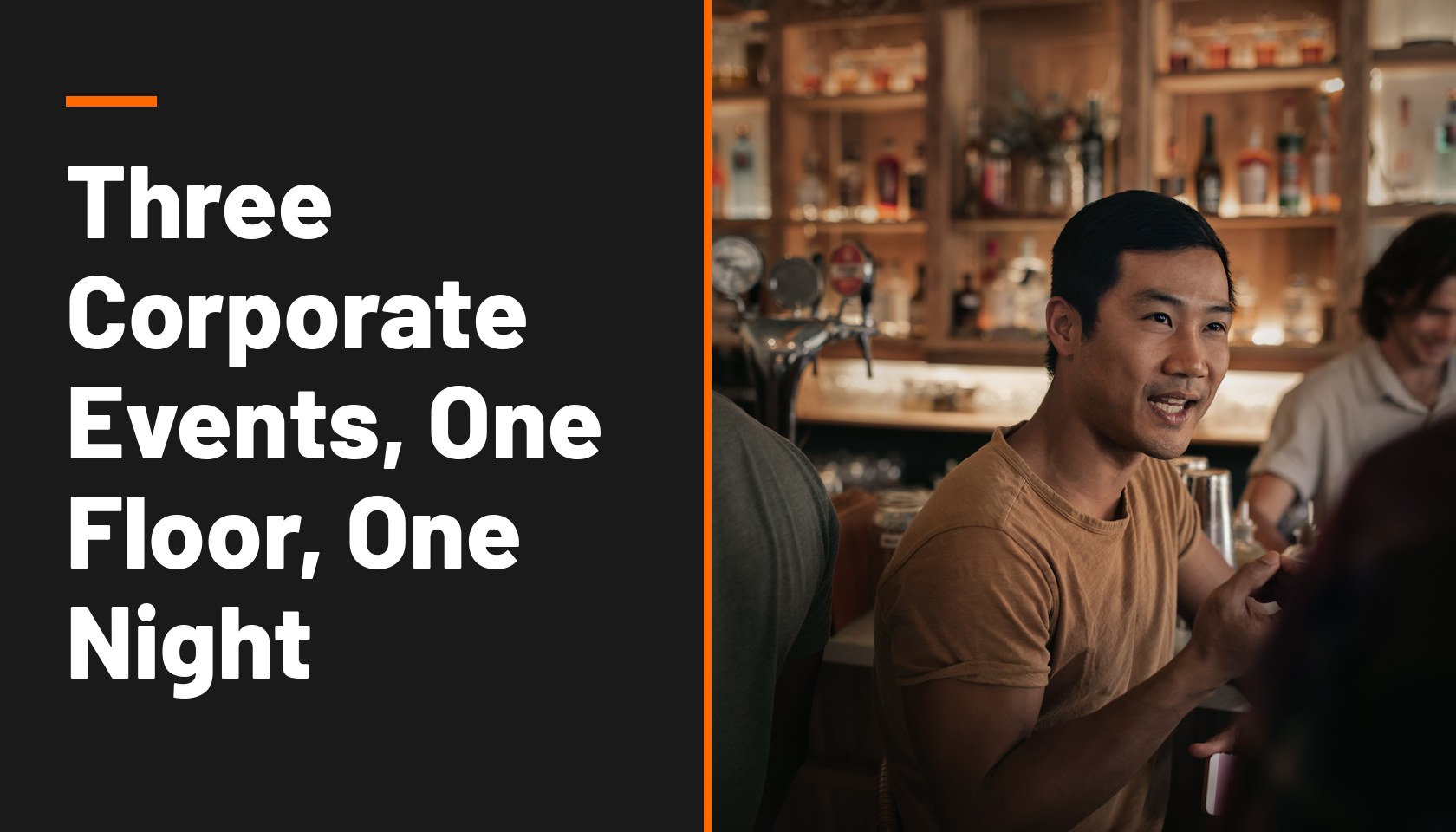
Events are one of the most reliable growth levers a food hall has, and one of the most commonly under-planned. A live music night, a trivia series, a ticketed tasting, or a private buyout doesn't just bring in incremental revenue on its own — it's also one of the most direct tools an operator has for helping a struggling vendor without a difficult conversation about their base numbers. Featuring a vendor in the next event, giving them visibility to a bigger crowd than a normal Tuesday, is often the highest-leverage thing an operator can do.
But that only works if events get planned with the same rigor as day-to-day operations, not bolted on a week out. Operationally, that means coordinating staffing and inventory across every participating vendor ahead of time, not asking each one to guess at expected volume. From a marketing standpoint, it means promotion starting well before the event, and treating ticketing and guest communication as part of the same guest experience as everyday ordering rather than a separate system entirely. Chris Viola, founder of Culture Collective at Anderson Market, put it directly: being able to sell event tickets directly instead of through a third party's fee structure changed how viable events were as a real part of the business, not just a marketing add-on. The Golden Mill and The Market at Malcolm Yards show the same pattern — the strongest guest experiences treat events, ordering, and vendor operations as one connected system, not three separate ones.
The Bottom Line
Vendor turnover isn't prevented by better lease terms — it's prevented by catching decline early, having a transparent conversation about it, and having the operational and marketing tools ready to act on it. That requires a technology stack that gives operators visibility across every vendor from day one, and it requires treating events as core to the business rather than optional. For more on how this fits into a broader operating model, see our Hybrid Service Model Implementation Guide. The food halls that retain vendors longest are the ones where the operator is already having these conversations before a renewal date ever forces the issue.
Want to see how a unified platform makes this kind of visibility possible? Request a demo.