

English
For hotels and resorts, the guest experience extends far beyond the room. From the moment a traveler books through check-in, dining, amenities, on-property activities, and post-stay engagement, every interaction represents an opportunity to make the stay more convenient, personalized, and memorable.
Yet many hospitality operators are still constrained by legacy technology systems that were not designed to support today’s connected guest journey.
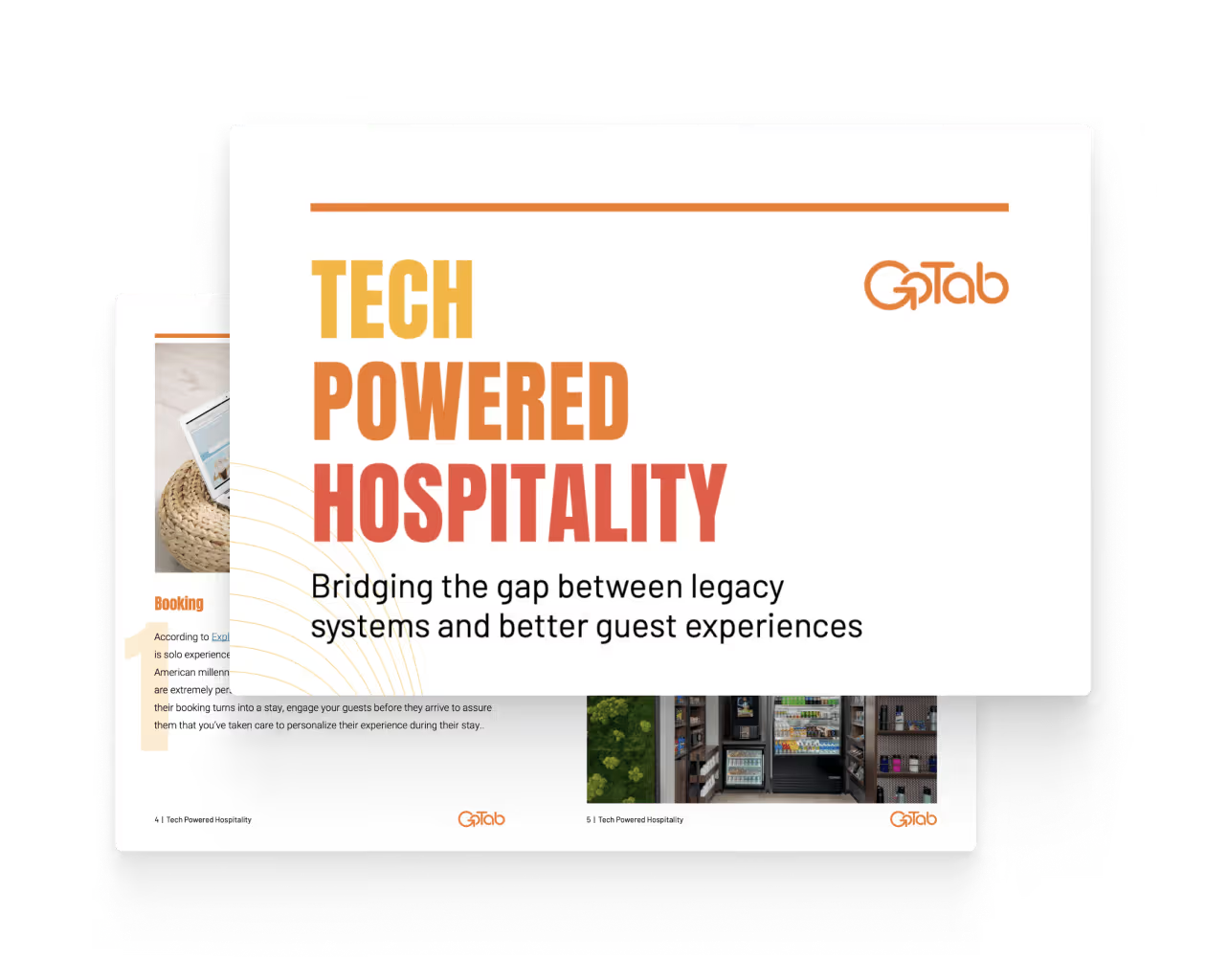
Tech-Powered Hospitality: Bridging the Gap Between Legacy Systems and Better Guest Experiences explores how hotels and resorts can use modern hotel technology, mobile ordering, contactless guest experiences, system integrations, and digital hospitality tools to overcome those limitations. The guide provides a practical framework for improving the entire hotel guest journey while unlocking ancillary revenue beyond traditional room bookings.
The guide begins with a fundamental shift in thinking: hotel operators should look beyond room revenue and consider the value of the entire guest journey. A guest may interact with a property through booking, pre-arrival communications, check-in, restaurants, room service, pools, spas, retail, recreation, and other amenities. Connecting these experiences can help hotels increase guest satisfaction while creating new opportunities for revenue.
Pre-arrival is one of those opportunities. Hotels can give guests the ability to purchase food, beverages, essentials, upgrades, and experiences before they arrive. By making these services easy to discover and buy, properties can capture spending that might otherwise go to third-party platforms while creating a more personalized arrival experience.
Once guests are on property, mobile ordering and payment technology for hotels can extend service beyond traditional restaurants and bars. Guests can order from their rooms, poolside, on a patio, at recreational facilities, or in other areas that may be difficult to serve with traditional staffing models. Instead of requiring additional fixed POS stations everywhere guests spend time, mobile technology can turn the guest’s own device into a convenient ordering and payment channel.
The guide also explores how hotel technology integrations can help operators work around the limitations of legacy systems. Rather than replacing every core platform, hotels can connect modern hospitality technology with existing property management systems and operational tools to create more flexible guest experiences.
Personalization and communication are equally important. First-party ordering data can help operators better understand guest preferences, while real-time messaging allows guests to ask questions, request assistance, and communicate with staff without relying exclusively on phone calls or face-to-face interactions. In-the-moment feedback can also give hotel teams an opportunity to resolve service issues before a guest leaves the property.
Real-world examples demonstrate the revenue potential of these strategies. The guide highlights how The Delegate expanded ordering across a hotel property without adding staff, while Oceanpoint Ranch used in-room QR code ordering across participating hotels to generate more than 10% in additional revenue.
The guide also examines self-service amenities, digital check-in, loyalty, personalized offers, and post-stay feedback as components of a more connected hospitality experience.
Download Tech-Powered Hospitality to explore how hotels and resorts can bridge the gap between legacy systems and modern guest expectations. Learn practical strategies for using hotel technology, mobile ordering, integrations, real-time communication, self-service, and digital guest experiences to increase ancillary revenue, serve guests throughout the property, and create a more seamless journey from pre-arrival through post-stay.